
The world changed this past weekend with the dramatic U.S. operation to seize Venezuelan President Nicolás Maduro. By change, I meant the world went backward to a time that has already proven itself as failed, oppressive, and dangerous on a global scale. President Donald Trump and U.S. foreign policy just led the world back into the age of unabashed “might makes right” foreign policy.
Many governments have already described the U.S. actions in Venezuela as unprecedented and a violation of sovereignty. They are citing principles that expired Saturday night.

While the immediate fallout has centered on U.S.–Russia tensions, the future of Venezuela’s political order, and the shock to global oil markets, one of the most consequential arenas of reaction is thousands of miles away:
China’s Strategic Calculus Toward Taiwan
Beijing’s response blends anger, opportunity, caution, and recalibration, shaped by both the symbolism of the U.S. action and the practical risks of escalation.
Chinese officials swiftly condemned the U.S. raid, framing it as a breach of international law and a destabilizing assertion of unilateral power. This reaction aligns with China’s long-standing narrative that Washington selectively applies the “rules-based international order” to suit its interests—a theme echoed in Chinese state media and highlighted in global reporting.
Analysts note that Beijing viewed the operation not only as an attack on a partner state but also as a humiliation: a high-level Chinese delegation had met with Maduro in Caracas just hours before the raid, and Chinese-made radar systems failed to detect the U.S. aircraft involved. This embarrassment has fueled nationalist anger online, where Chinese netizens have openly suggested that Beijing should adopt similar tactics toward Taiwan, including “decapitation strikes” against Taiwanese leadership.
Yet China’s leadership is far more cautious than its online commentators. While the Maduro operation provides Beijing with rhetorical ammunition—allowing it to portray the U.S. as reckless, hypocritical, and destabilizing—it does not automatically translate into a green light for military action across the Taiwan Strait.
As Bloomberg reporting emphasizes, any Chinese strike on Taiwan would carry vastly higher costs than the U.S. raid in Venezuela, including sweeping Western sanctions, a potential confrontation with the U.S. and its allies, and catastrophic disruption to global semiconductor supply chains. Unlike Venezuela, Taiwan is central to the world economy, and any conflict would reverberate through every major industry.
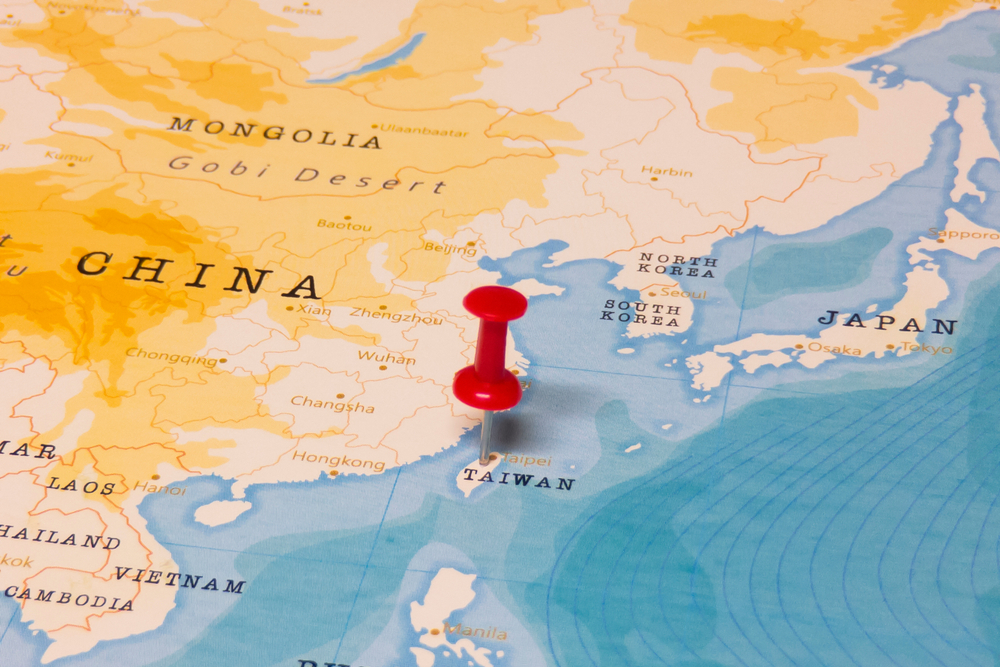
Still, the Maduro episode does influence China’s strategic thinking in several ways. First, it reinforces Beijing’s belief that Washington is willing to take bold, norm-breaking actions when it perceives a threat or opportunity. This may accelerate China’s efforts to prepare for contingencies in the Taiwan Strait, including blockades, cyber operations, and political warfare. China has already conducted large-scale military drills simulating a siege of Taiwan’s ports and infrastructure, as well as rehearsals for “decapitation strikes” on Taiwanese leadership. The U.S. action in Venezuela may strengthen Beijing’s resolve to continue these preparations, both as deterrence and as rehearsal.
Second, the raid underscores the fragility of China’s influence in regions where it has invested heavily. Venezuela has long been one of Beijing’s closest partners in the Western Hemisphere, a major recipient of Chinese loans, technology, and political support. The sudden collapse of Maduro’s government—engineered by Washington—signals to Beijing that its overseas investments and alliances remain vulnerable to U.S. intervention. This may push China to double down on securing its core interests closer to home, including Taiwan, where it believes it has greater leverage and strategic depth.
Third, the global reaction to the Maduro raid provides China with a diplomatic opening. Many countries, including U.S. rivals, have condemned the operation as a dangerous precedent. Beijing can use this moment to position itself as a defender of sovereignty and stability, contrasting its rhetoric with what it portrays as American adventurism. This narrative is already visible in Chinese statements emphasizing “peace-loving” principles and criticizing unilateral military actions. By framing itself as a responsible power, China seeks to weaken international support for U.S. involvement in Taiwan.
However, the most important factor shaping China’s response is risk. As Newsweek reporting notes, many experts argue that the Maduro operation will not fundamentally alter Beijing’s calculus toward Taiwan, because China’s restraint has never been rooted in respect for international law—it has been rooted in the enormous strategic, economic, and political risks of war. China’s military remains untested in modern combat, and any failed attempt to seize Taiwan would threaten the legitimacy of the Chinese Communist Party. Moreover, Taiwanese society is democratic, resilient, and likely to unify in the face of external aggression, unlike the fragmented political environment in Venezuela.
In the short term, China is likely to respond with *sharper rhetoric, intensified military drills, and increased political pressure on Taiwan. It may also accelerate efforts to undermine Taiwanese morale, interfere in elections, and isolate Taipei diplomatically. But a full-scale invasion or decapitation strike remains unlikely in the immediate aftermath of the Maduro raid. Beijing’s leaders are strategic, not impulsive, and they recognize that the stakes in Taiwan are existential.
In the long term, however, the U.S. action in Venezuela may contribute to a more volatile global environment in which major powers feel freer to test boundaries. If Washington asserts the right to remove foreign leaders by force, Beijing may argue—at least rhetorically—that it has similar rights regarding what it considers a renegade province. This erosion of norms is precisely what many policymakers fear: a world in which great powers increasingly act unilaterally, citing each other’s precedents.
China’s response to the Maduro episode is therefore a mix of anger, calculation, and strategic patience. The Taiwan Strait remains one of the world’s most dangerous flashpoints, and the events in Venezuela have only added new layers of complexity. Whether this moment becomes a turning point depends not only on Beijing’s next moves but also on how Washington, Taipei, and the international community navigate the fragile balance of deterrence and diplomacy in the months ahead.
Read More