
Hernán Cortés de Monroy y Pizarro Altamirano was born in 1485 in Medellín, Spain, to a family of minor nobility. Though his lineage carried honor, it lacked wealth, and Cortés grew restless in provincial life. At age 14, he was sent to study law at the University of Salamanca, but his ambitions soon turned toward the New World, inspired by tales of Columbus and the riches of the Indies.
In 1504, Cortés sailed to Hispaniola (modern-day Dominican Republic), where he worked as a notary and farmer. By 1511, he joined Diego Velázquez’s expedition to conquer Cuba, rising quickly in colonial society. He was granted land, Indigenous laborers, and became mayor of Santiago. Yet Cortés hungered for more—especially the rumored wealth of the mainland.
In 1519, Velázquez appointed Cortés to lead an expedition to Mexico but later revoked the order. Defying authority, Cortés set sail anyway with 500 men, 11 ships, and a burning desire for conquest. Landing in Tabasco, he gained intelligence from local tribes and received 20 women as gifts—among them Marina (La Malinche), who became his interpreter, advisor, and mother of his son Martín.
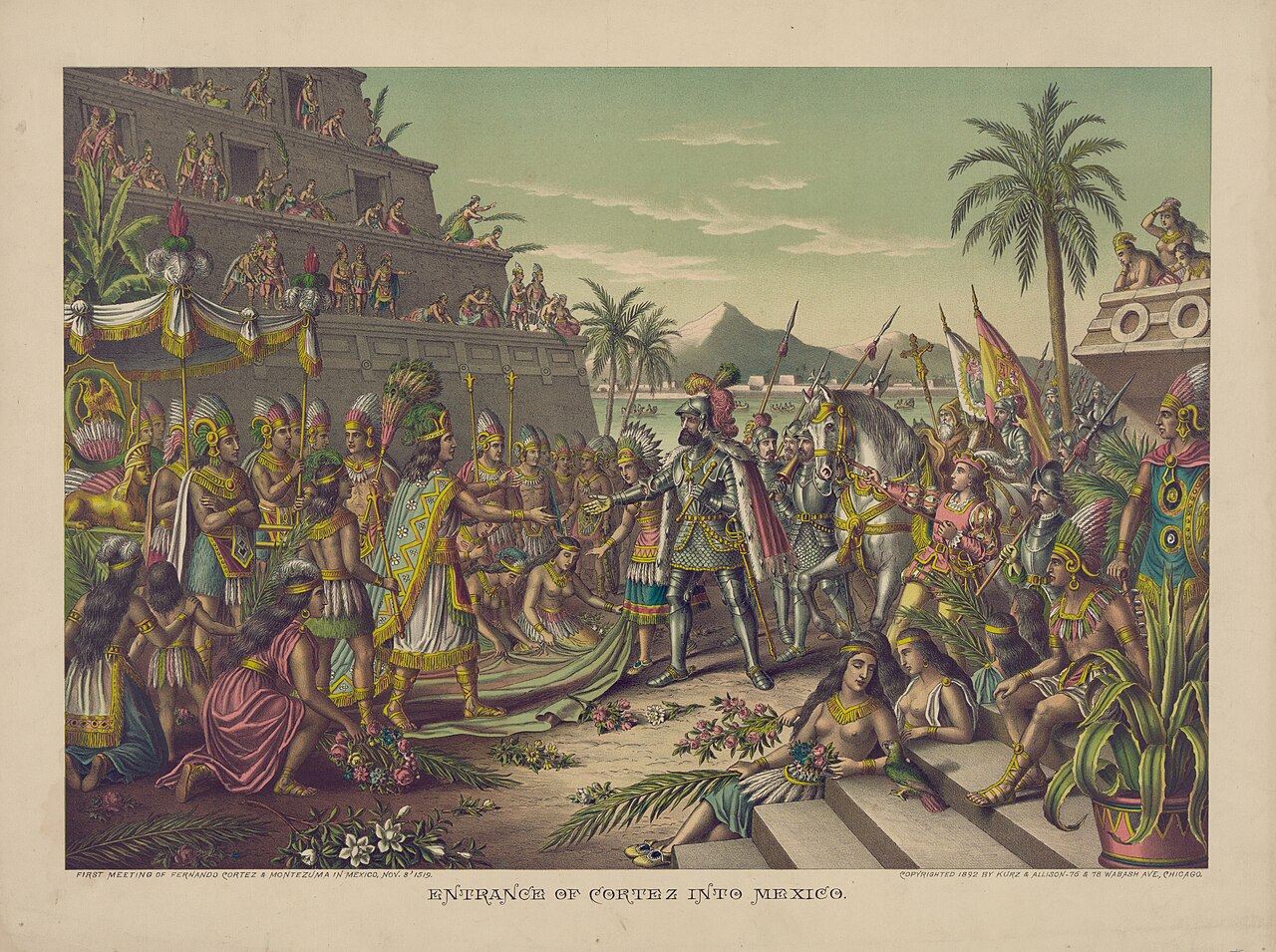
Cortés’s strategy was bold and ruthless. He forged alliances with Indigenous enemies of the Aztecs, notably the Tlaxcalans, and marched toward the empire’s heart—Tenochtitlan. There, he met Emperor Montezuma II, who initially welcomed the Spaniards, believing Cortés might be a divine figure. Tensions escalated, and in 1520, after a violent uprising, the Spanish fled the city in a bloody retreat known as La Noche Triste.

Undeterred, Cortés regrouped, reinforced his army, and returned in 1521 to lay siege to Tenochtitlan. After months of brutal fighting, the city fell. Cortés claimed the territory for Spain, marking the collapse of the Aztec Empire and the birth of New Spain. He was appointed governor and captain-general, though his authority was soon challenged by rivals and royal officials.
Cortés’s conquest was marked by military brilliance, political cunning, and devastating consequences. He introduced European weapons, horses, and tactics, but also unleashed smallpox and other diseases that decimated Indigenous populations. His use of Indigenous allies and manipulation of local rivalries were key to his success, but his legacy remains controversial—seen by some as a visionary and by others as a symbol of colonial brutality.
In later years, Cortés explored Honduras and returned to Spain seeking recognition. Though he was granted the title Marquis of the Valley of Oaxaca, he struggled to regain influence. He died on December 2, 1547, in Castilleja de la Cuesta, near Seville.
Hernán Cortés’s life reshaped the Americas. He toppled one of the world’s most sophisticated civilizations, expanded Spain’s empire, and set the stage for centuries of colonial rule. His ambition, audacity, and complex legacy continue to provoke debate, making him one of the most consequential—and controversial—figures of the Age of Exploration.