
Long before the skyscrapers of New York or the missions of California, long before Europeans imagined a world beyond the Atlantic, a remarkable civilization flourished in the high desert mesas and deep sandstone canyons of the American Southwest. Today we call them the Ancestral Puebloans, but they were once known as the Anasazi—a Navajo word meaning “ancient enemies,” a label modern Pueblo peoples rightly reject. Their story is one of ingenuity, astronomy, architecture, and resilience, unfolding across more than a thousand years in the region where Arizona, New Mexico, Colorado, and Utah meet.

The Ancestral Puebloans were not a single tribe but a cultural tradition that evolved over centuries. Their descendants include the Hopi, Zuni, Acoma, and Laguna peoples, who still carry forward many of their traditions. What makes the Ancestral Puebloan civilization so fascinating is how they transformed one of North America’s harshest environments into a landscape of thriving communities, ceremonial centers, and architectural marvels that still inspire awe today.
From Pit Houses to Stone Cities
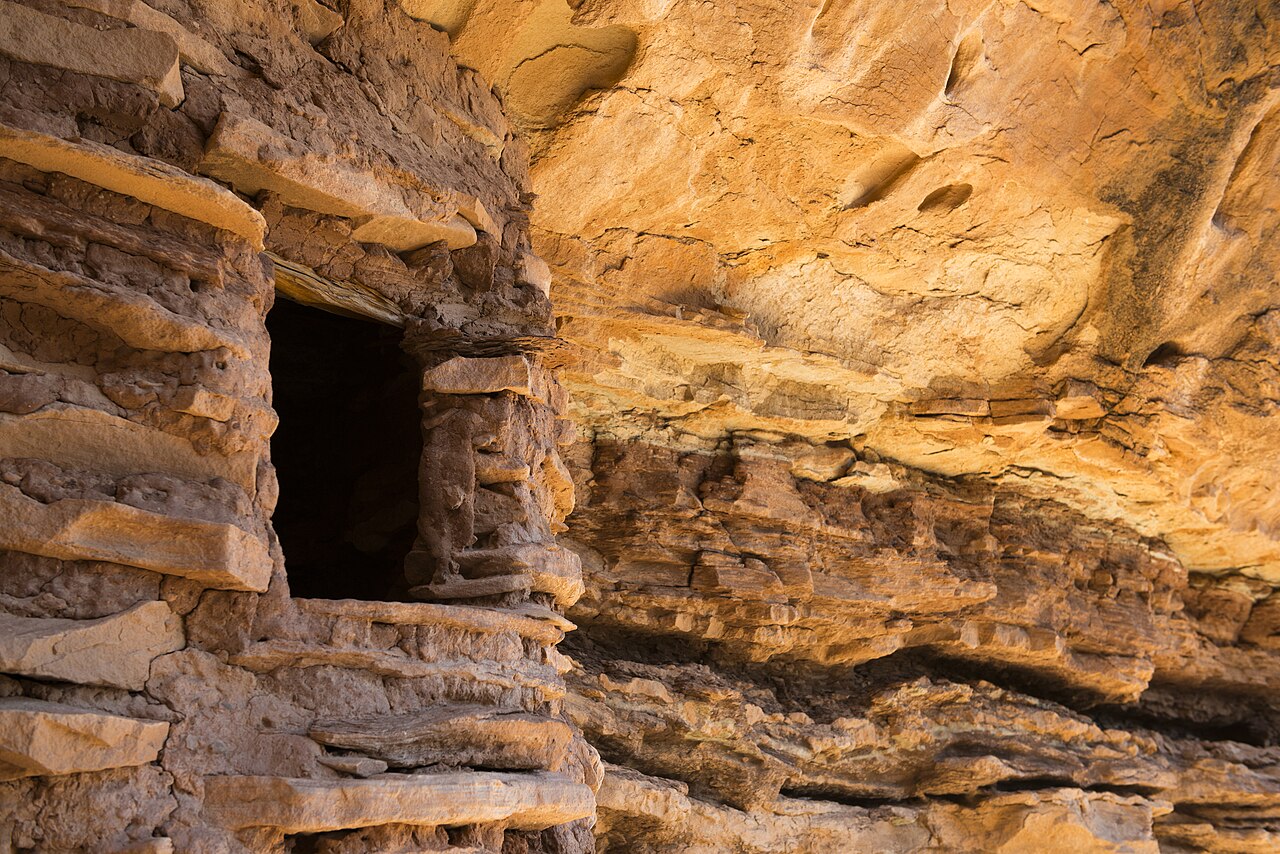
The earliest phases of Ancestral Puebloan life began around 100 AD, when small farming communities built pit houses—semi‑subterranean dwellings dug into the earth for insulation against desert heat and winter cold. Over time, these modest homes evolved into multi‑room villages, and by 700 AD, the people of the region were constructing above‑ground masonry structures using sandstone blocks and adobe mortar.
This architectural evolution reached its zenith in places like Chaco Canyon, Mesa Verde, and Canyon de Chelly, where the Ancestral Puebloans built some of the most iconic structures in North American prehistory.
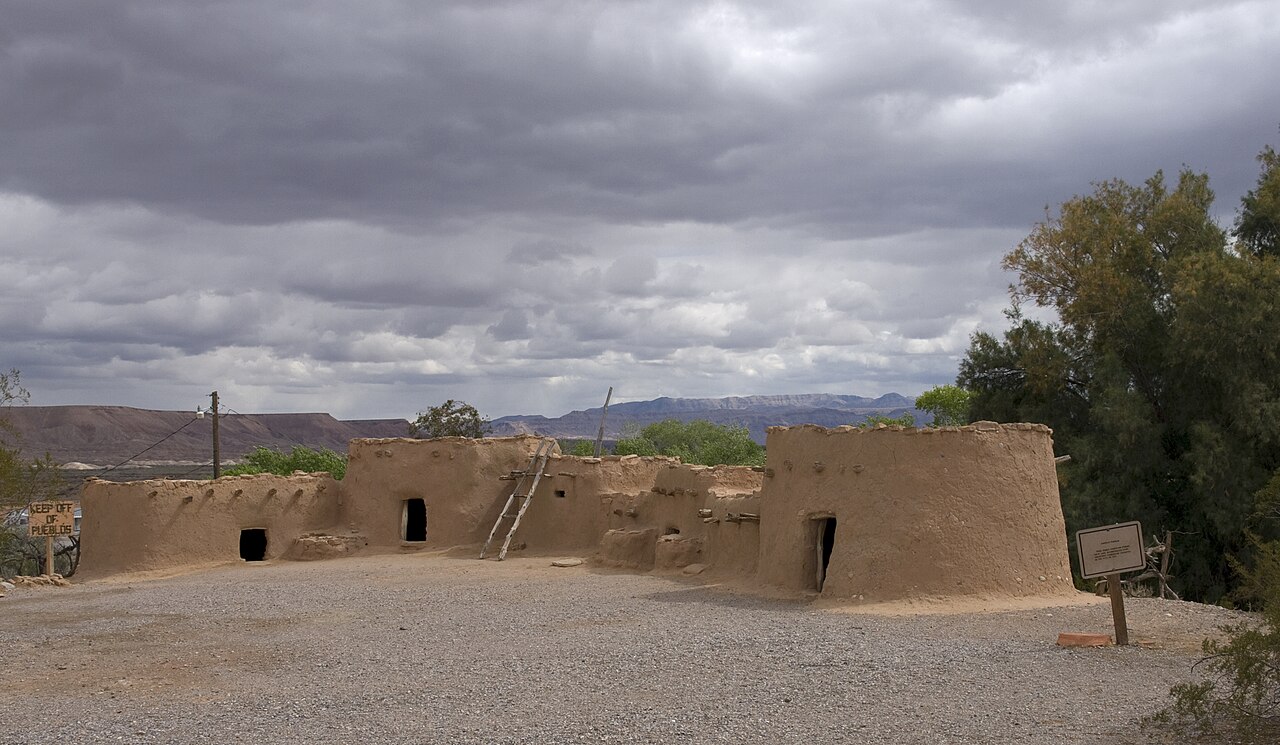
Chaco Canyon, in northwestern New Mexico, became the cultural and ceremonial heart of the civilization between 900 and 1150 AD. Here, the Puebloans constructed massive “great houses”—multi‑story stone complexes with hundreds of rooms, engineered with astonishing precision. Pueblo Bonito, the largest of these, contained more than 600 rooms and rose four or five stories high. Its D‑shaped layout, aligned with solar and lunar cycles, reveals a society deeply attuned to the cosmos.
Meanwhile, in the cliffs of Mesa Verde in Colorado, the Puebloans carved entire villages into sandstone alcoves. The most famous, Cliff Palace, contains more than 150 rooms and 23 kivas—circular ceremonial chambers that served as the spiritual heart of Puebloan life. These cliff dwellings were not primitive shelters; they were carefully engineered, strategically located, and aesthetically striking, blending seamlessly into the canyon walls.
Masters of the Desert
Surviving in the arid Southwest required ingenuity. The Ancestral Puebloans developed sophisticated agricultural systems to grow maize, beans, and squash—the “Three Sisters” that sustained many Indigenous cultures. They built check dams, reservoirs, and terraced fields to capture scarce rainfall. In Chaco Canyon, they engineered an extensive road network, some segments perfectly straight for miles, connecting outlying communities to the ceremonial center.
Their pottery, too, became a hallmark of their culture. Black‑on‑white ceramics from Chaco and black‑on‑red pottery from Kayenta reveal both artistic flair and technological skill. Designs often carried symbolic meaning—spirals, feathers, animals, and geometric patterns that reflected their worldview.

A Civilization Guided by the Sky
One of the most striking features of the Ancestral Puebloan world is their astronomical sophistication. Many structures were aligned with solstices, equinoxes, and lunar standstills. At Chaco Canyon, the famous Sun Dagger site on Fajada Butte uses shafts of light to mark the summer solstice with astonishing accuracy. Great houses were positioned to track celestial cycles, reinforcing the authority of priestly leaders who interpreted the movements of the heavens.
This blending of astronomy, agriculture, and religion created a society where cosmic order and earthly survival were deeply intertwined. Rituals conducted in kivas sought harmony with the spiritual world, ensuring rainfall, fertility, and balance. The priestly class who oversaw these ceremonies held immense power—until the climate began to shift.
Climate Change and Collapse
Around the mid‑1100s, the Southwest entered a period of prolonged drought. Tree‑ring data shows that rainfall declined sharply, and maize harvests began to fail. As water sources dried up and game became scarce, the social fabric of the Ancestral Puebloan world began to fray.
Chaco Canyon, once a bustling ceremonial hub, was gradually abandoned. The great houses fell silent. People migrated outward, seeking more reliable water and farmland. In the 1200s, another severe drought struck, triggering widespread conflict, resource competition, and the eventual abandonment of the cliff dwellings at Mesa Verde.
The collapse was not sudden but a slow unraveling. As the priestly class failed to deliver the promised harmony with nature, trust eroded. Communities splintered. Families moved south and east toward the Rio Grande Valley and the Hopi mesas, where their descendants still live today.
A Legacy Written in Stone
Though the great centers of the Ancestral Puebloans were abandoned, their legacy endures. Modern Pueblo peoples maintain many of the traditions, ceremonies, and agricultural practices of their ancestors. The architectural achievements of Chaco Canyon and Mesa Verde remain among the most impressive in North America. Their astronomical knowledge continues to fascinate researchers. And their story offers a powerful reminder of how climate, culture, and belief intertwine in the rise and fall of civilizations.
The Ancestral Puebloans were not primitive cave dwellers. They were engineers, astronomers, artists, farmers, and spiritual thinkers who built a civilization as complex and compelling as any in the ancient world. Their stone cities and cliff palaces still stand as monuments to human creativity and resilience—silent witnesses to a world that thrived long before Europeans arrived.