
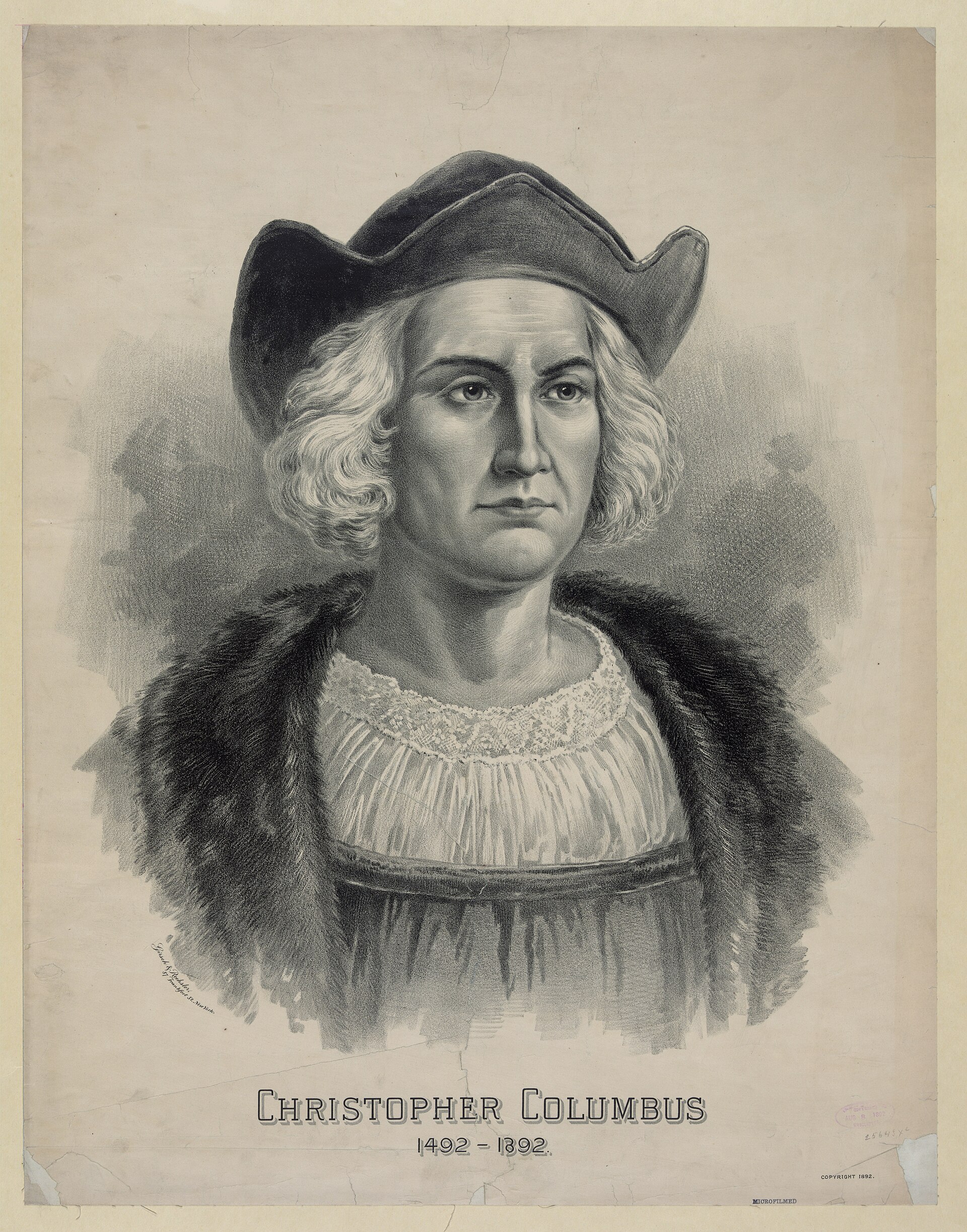
Christopher Columbus was born between late August and late October of 1451 in the bustling maritime Republic of Genoa, a world where the sea shaped identity, ambition, and destiny. The son of a wool weaver, Columbus grew up far from nobility, yet he possessed a restless imagination and a deep sense of calling. From an early age, he went to sea, traveling as far north as the British Isles and as far south as the coast of West Africa. These early voyages did more than teach him navigation—they awakened in him a conviction that God had set him apart for a great purpose.
Columbus was largely self‑educated, devouring works of geography, astronomy, and theology. He read Scripture with the same intensity he applied to nautical charts. His journals reveal a man who believed his mission was not merely commercial but spiritual. He saw exploration as a divine assignment—an opportunity to spread Christianity, open new pathways for evangelization, and participate in what he viewed as God’s unfolding plan for the world. In this sense, Columbus was not simply a sailor; he was a man animated by faith, convinced that Providence guided his compass.
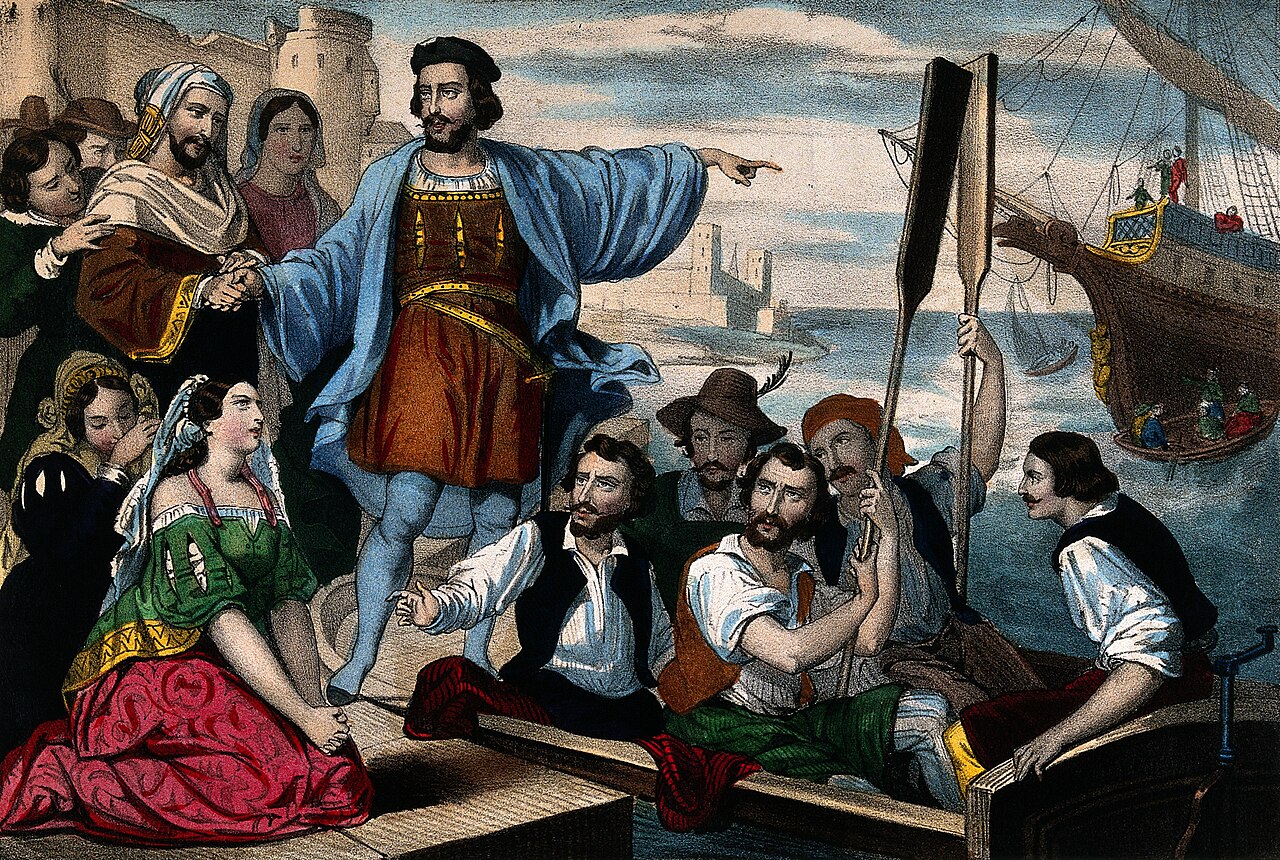
During his years in Lisbon, Columbus married Filipa Moniz Perestrelo, a noblewoman whose family had deep ties to Atlantic exploration. Through her, he gained access to maps, logs, and knowledge of Atlantic winds and currents. Yet even as he absorbed the technical knowledge of the age, his vision remained spiritual. He believed that by sailing west to reach the East Indies, he could help fund a future crusade to retake Jerusalem. This was not a passing idea—it appears repeatedly in his writings. For Columbus, exploration was inseparable from devotion.
His proposal to reach Asia by sailing west was bold, unconventional, and widely doubted. Many experts believed the oceans were too vast, the distances too great. But Columbus persisted, lobbying courts across Europe until finally, after the completion of the Granada War, the Catholic Monarchs Ferdinand and Isabella agreed to sponsor his voyage. Their support was not only political but religious—they saw in Columbus a man whose faith aligned with their own vision for a Christian kingdom expanding its influence.
On August 3, 1492, Columbus set sail from Palos with three ships—the Niña, the Pinta, and the Santa María—and a crew that shared both his hopes and his fears. After a stop in the Canary Islands, they crossed into waters no European had charted. Columbus kept morale alive through prayer, leadership, and unwavering confidence. When land was sighted on October 12, 1492, he believed his faith had been vindicated. He named the island San Salvador—“Holy Savior”—a testament to the spiritual lens through which he viewed his achievement.
Columbus’s first voyage opened the door to a new era of global interaction. He explored the Bahamas, Cuba, and Hispaniola, establishing a small settlement on the latter. When he returned to Spain in early 1493 with news of new lands and new peoples, Europe was electrified. His achievement was unprecedented: he had linked two hemispheres that had developed in isolation for thousands of years. The pre‑Columbian era had ended, and a new chapter of world history had begun.
Over the next decade, Columbus completed three more voyages, exploring the Lesser Antilles, Trinidad, the northern coast of South America, and the shores of Central America. He charted waters no European had seen, corrected misconceptions about geography, and expanded the known world. Though he never reached Asia, his achievements reshaped global trade, migration, and cultural exchange.
Columbus’s faith remained central throughout his journeys. He prayed daily, invoked God in his logs, and believed that every discovery was part of a divine plan. Even when facing storms, mutinies, political rivals, and personal setbacks, he interpreted his trials through a spiritual lens. His final years were marked by disappointment—his governorship was stripped, and he felt mistreated by the Crown—yet he never abandoned his belief that God had chosen him for a sacred mission.
Columbus died on May 20, 1506, in Valladolid, still convinced he had reached the outskirts of Asia. He never knew he had encountered a continent unknown to Europeans, Africans, and Asians. Yet the unintended consequences of his voyages were profound.
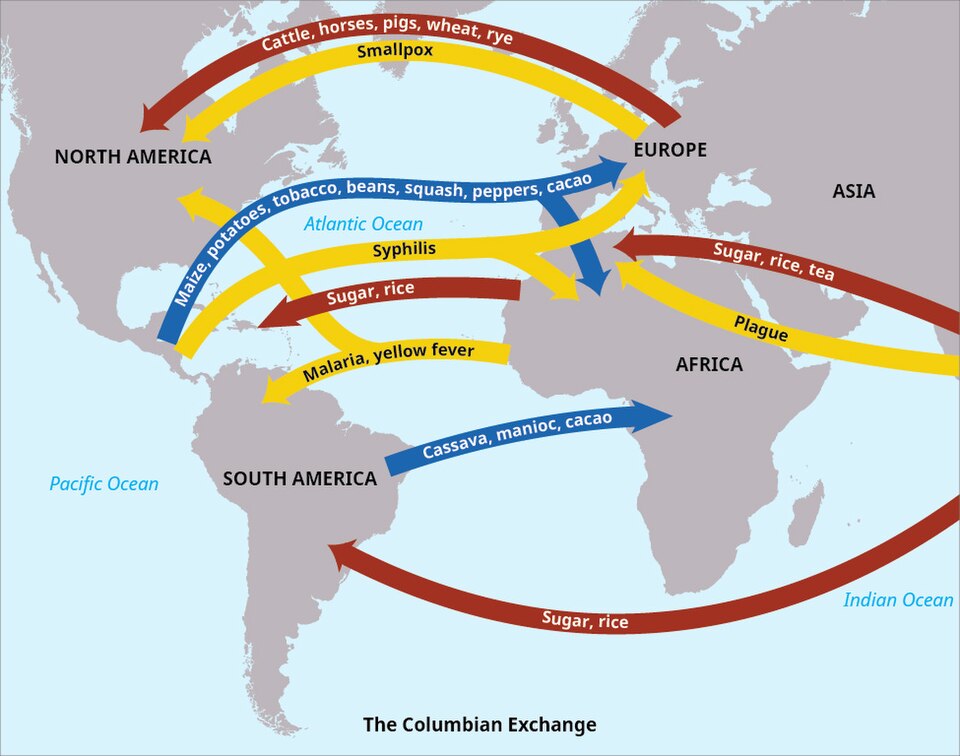
His journeys initiated what historians call the Columbian Exchange—the vast transfer of plants, animals, technologies, and ideas between the Old World and the New. Europe gained potatoes, tomatoes, corn, and tobacco; the Americas received horses, cattle, wheat, and new tools. This exchange transformed diets, economies, and ways of life across the globe.
But the consequences were not only beneficial. Diseases carried unknowingly by Europeans devastated Indigenous populations who had no immunity. Columbus himself could not have foreseen this biological catastrophe; the science of disease transmission was centuries away. Yet the impact was immense and tragic. The National Christopher Columbus Association notes that these consequences were “unintended” and must be understood within the context of a world where both sides of the Atlantic held values and practices very different from today.
Columbus’s voyages also opened the door to European colonization—an era that brought both opportunity and suffering. New nations emerged, Christianity spread across the hemisphere, and global trade networks expanded. At the same time, Indigenous cultures faced displacement, exploitation, and profound disruption. Columbus did not plan these outcomes, but his voyages set in motion forces that reshaped the world.
To understand Columbus fairly is to recognize both the greatness of his achievements and the complexity of his legacy. He was a man of his age—ambitious, devout, flawed, visionary. He united two worlds, not by accident but through determination, courage, and faith. His belief that God guided his mission sustained him through storms, political battles, and personal loss. His achievements changed the course of history, and the unintended consequences of his voyages continue to shape the modern world.
More than five centuries later, Columbus remains a figure of debate, admiration, and reflection. But one truth is undeniable: his voyages marked one of the most significant turning points in human history. He expanded the boundaries of the known world, connected civilizations, and set in motion a global transformation whose effects are still unfolding. His story—rooted in faith, driven by vision, and marked by consequences he could never have imagined—remains one of the most remarkable narratives of the human spirit’s reach across the unknown.