What Happened
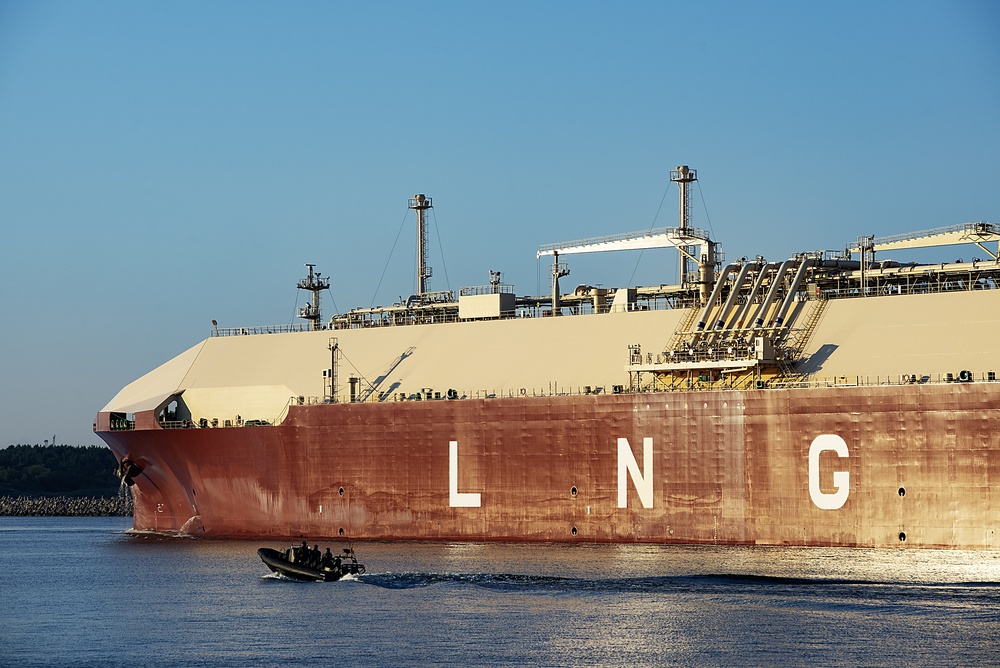
A new workaround is emerging for one of the most vulnerable parts of the global energy system. Qatari and UAE LNG producers have begun transferring liquefied natural gas between tankers outside the Strait of Hormuz, an unusually complex operation for LNG cargoes. Reuters identified at least three such transfers in international waters near Oman and the UAE, involving cargoes ultimately bound for India and Japan. In two cases, vessels that had previously been struck or involved in incidents near Hormuz transferred their LNG to other tankers once outside the highest-risk area. Reuters Reuters: Qatar and UAE LNG cargoes use rare ship-to-ship transfers outside Hormuz
This is happening because the gas-market disruption has become extreme. Asian spot LNG prices have reached roughly $23.20 per million BTU—more than double pre-conflict levels. Qatar alone supplied about 18.7% of global LNG trade in 2025, while the IEA calculates that Qatar and the UAE together accounted for almost 20% of global LNG trade moving through Hormuz. Nearly 90% of those Gulf cargoes historically went to Asia. ReutersReuters: LNG shipping disruption pushes Asian spot gas above $23 | International Energy Agency: Hormuz carried almost 20% of global LNG trade
How This Affects Ordinary People
For households in Japan, South Korea, China, India and other LNG-dependent Asian economies, expensive gas can feed directly into electricity and heating costs because LNG is an important fuel for power generation. Industrial users—including chemicals, fertilizers, steel and manufacturing—also pay more, which can eventually appear in consumer prices. The emergency transfers do not make LNG cheap again, but they offer a way to keep some cargoes moving despite the deteriorating security environment. IEA IEA: Asia received nearly 90% of LNG historically shipped through Hormuz | Reuters: Emergency transfers deliver Gulf LNG toward India and Japan
Europe is affected indirectly as well. When Asian buyers must replace missing Gulf gas, they compete more aggressively for LNG from the United States, Africa and other suppliers, potentially lifting prices internationally. Qatar has already suspended deliveries to Italy’s Edison through early November, with 29 cargoes totaling about 3.8 billion cubic meters canceled, forcing Edison to secure replacement supplies elsewhere. Reuters Reuters: Qatar extends suspension of LNG deliveries to Italy through early November
Why This Matters
Oil has dominated attention around Hormuz, but LNG may be the more difficult commodity to reroute. The IEA says there is no meaningful alternative export route for Qatari and UAE LNG comparable with the pipelines that allow some Gulf crude to bypass the strait. Qatar is the world’s second-largest LNG exporter, and its gas increasingly underpins power systems across Asia. That makes preserving even partial shipping flows economically important well beyond the Gulf. IEA International Energy Agency: Gulf LNG has no significant alternative export route around Hormuz | U.S. Energy Information Administration: Qatar is one of the world’s dominant LNG suppliers
The ship-to-ship operations therefore show the energy market beginning to redesign its logistics in real time. Gulf states are already accelerating pipelines and ports designed to reduce dependence on Hormuz for oil; LNG traders are now improvising maritime relays to reduce tanker exposure. Neither solves the underlying chokepoint problem, but together they demonstrate that businesses and governments are starting to treat prolonged disruption—not quick normalization—as the operating assumption. Reuters Reuters: Rare LNG transfers emerge outside the Strait | Reuters: Gulf states accelerate infrastructure designed to reduce Hormuz dependence
What Changed
Until now, the LNG story was primarily lost production, canceled cargoes and soaring prices. The materially new development is operational: exporters and shipping companies have now demonstrated that LNG can be transferred between vessels outside the highest-risk zone and still reach customers. These are unusual operations because LNG requires specialized cryogenic handling, making ship-to-ship transfers substantially more complicated than ordinary oil transfers. Reuters Reuters: Three rare LNG ship-to-ship transfers have now been identified
The story has shifted from “Hormuz disruption is cutting Gulf LNG exports” toward “the global gas industry is building an emergency logistics system to keep part of that trade functioning.” It is not enough to restore normal supply—Asian gas prices being more than twice pre-war levels make that clear—but it could prevent an even more severe shortage while signaling something larger: energy markets are increasingly preparing for the possibility that the Hormuz crisis lasts for months rather than weeks. Reuters Reuters: Emergency LNG relay emerges amid prolonged Gulf disruption | International Energy Agency: nearly one-fifth of global LNG trade depends on Hormuz