

What Happened
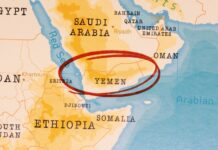
The global economy is becoming increasingly divided, with a shrinking number of countries generating nearly all worldwide economic growth. In its new World Economic Outlook, released October 13 in Bangkok, the International Monetary Fund reports that just 32 countries now account for 95% of global economic growth, compared with 54 countries in April. The IMF has slightly raised its forecast for worldwide growth in 2026 from 3.0% to 3.1%, but that improvement conceals a troubling divergence. Economies benefiting from artificial intelligence investment are expanding, while many countries exposed to the Middle Eastern energy crisis are experiencing serious economic deterioration. The IMF has downgraded its growth forecasts for 47% of economies since April. The contrast is particularly striking in the Persian Gulf, where Saudi Arabia is now expected to experience a 3.3% economic contraction this year, compared with the 1.7% growth forecast in July. The IMF’s central warning is that global economic resilience is becoming increasingly dependent on a relatively narrow group of countries and industries. Reuters Reuters — IMF Warns Global Growth Is Becoming Increasingly Concentrated, October 13
How This Affects Ordinary People
The growing economic divide means that households in different countries could experience dramatically different economic conditions, even while the global economy continues expanding. Workers in countries participating in the AI investment boom—including South Korea, Malaysia, Mexico and Thailand—may benefit from stronger manufacturing activity, infrastructure investment and employment opportunities. Meanwhile, families in energy-dependent economies outside those technology supply chains face a much more difficult environment: higher fuel and electricity costs, weaker economic growth and governments with diminishing resources to provide assistance. The IMF now forecasts global inflation of 4.7% in 2026 and 4.1% in 2027, suggesting that pressure on household budgets will persist. For workers, the distinction matters because a growing global economy does not necessarily translate into rising wages or better employment opportunities where they live. For savers and investors, increasing dependence on technology-related industries also creates concentration risks if the AI investment boom eventually disappoints. Reuters Reuters — New IMF Forecasts Reveal Uneven Growth and Persistent Inflation
Why This Matters
The global economy is becoming dependent on two opposing forces: an extraordinary technology investment boom that supports growth and an energy crisis that threatens to undermine it. According to IMF Deputy Research Director Petya Koeva Brooks, global economic growth might have fallen to approximately 2.5% this yearwithout the emergency measures governments and businesses adopted to cope with the oil shock. Those measures included drawing down energy reserves, finding alternative suppliers and reducing consumption. However, their effectiveness is diminishing as the crisis continues. The IMF’s new analysis also identifies substantial risks if the AI boom falters. In a scenario where expected productivity gains fail to materialize, triggering falling investment, declining asset prices and tighter financial conditions, global economic output could be 1.1% lower by 2028, with the United States experiencing a 1.8% reduction relative to the baseline. Separately, a worsening Middle Eastern conflict that pushes oil prices to $130 per barrel through early 2027 could reduce global growth by another 0.5 percentage point in 2027 while pushing inflation to 5.2%. These are modeled risks rather than forecasts of what will necessarily happen. Together, they demonstrate how vulnerable the global economy has become to disruptions in either energy markets or technology investment. Reuters Reuters — IMF Examines the Risks of an AI Slowdown and Prolonged Energy Crisis
What Changed
The significant new development is that the IMF has now quantified how dramatically global economic growth has become concentrated—and documented the growing number of countries falling behind. Earlier assessments emphasized the remarkable resilience of the world economy despite the Middle Eastern war, elevated energy prices and rising borrowing costs. The new October forecast reveals that this resilience is far from universal. The number of economies accounting for 95% of worldwide growth has fallen from 54 to 32 in approximately six months. Meanwhile, nearly half of national economies have experienced downward revisions to their growth forecasts. The IMF has also substantially revised its expectations for several major energy-producing countries: Iraq is now projected to contract 16%, Kuwait 16.7%, Qatar 15.6% and Iran 7.6% during 2026. These are forecasts, not confirmed annual outcomes. The importance of this development is not the modest increase in the headline global growth forecast. It is the emerging picture of a world in which economic prosperity is becoming more concentrated while an increasing number of countries struggle with inflation, debt and recession. That represents a material change in understanding the global economic outlook and raises an important question for international policymakers: whether the benefits of the technology-driven expansion can spread widely enough to prevent the economic divide from deepening. Reuters Reuters — October 13 World Economic Outlook: Growth Concentration and Regional Recessions | IMF — July 2026 Economic Outlook for Comparison