
What Happened
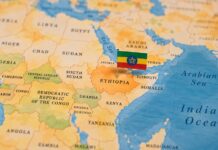
The Ebola epidemic in the Democratic Republic of the Congo has reached 11,042 confirmed infections and 5,387 deaths, according to government figures released November 10. The outbreak, declared in May, is now the deadliest in the country’s history and the second-largest Ebola epidemic recorded worldwide. Infections have spread across eight Congolese provinces, while cases associated with the regional outbreak have also been reported in neighboring countries and beyond. The epidemic involves the Bundibugyo species of Ebola virus, for which no vaccine or specific treatment is currently approved. Armed conflict, delayed diagnosis, attacks on healthcare facilities, and inadequate medical infrastructure have severely complicated containment efforts. The World Health Organization reported on November 6 that sustained transmission was continuing across much of the affected territory, with an unusually high proportion of deaths occurring outside treatment facilities. The latest figures indicate that the epidemic continues to expand despite international intervention. Reuters — Congo’s Ebola cases surpass 11,000 | Associated Press — Congo’s deadliest Ebola outbreak | WHO — November 6 outbreak assessment. Reuters
How This Affects Ordinary People
The epidemic is devastating families and communities already struggling with poverty, displacement, and armed violence. More than 5,300 people have died, leaving families without parents, children, caregivers, and wage earners. Healthcare workers face considerable exposure risks, while attacks on medical facilities and insecurity in eastern Congo prevent patients from receiving timely treatment. The consequences extend beyond Ebola itself: frightened families may avoid clinics, routine medical services can become harder to access, and restrictions on movement can interfere with employment, transportation, and local commerce. In its November 6 assessment, WHO reported that 335 of the 512 deaths recorded since October 21 occurred in communities rather than treatment centers, illustrating the difficulties of identifying and isolating infected patients. Cross-border consequences are also becoming evident. Kenya, which recorded nine infections and two deaths, discharged its final Ebola patient on November 11 and began the 42-day observation period required before an Ebola-free declaration. Nevertheless, restrictions imposed by other countries have affected Kenyan travelers and workers, demonstrating how a public-health emergency can disrupt livelihoods even where transmission has been contained. WHO — Community deaths and healthcare challenges | Associated Press — Kenya begins Ebola-free countdown | Associated Press — Conflict complicates outbreak response. World Health Organization
Why This Matters
The Congo epidemic has become one of the most consequential international public-health emergencies in recent history, combining a highly lethal infectious disease with an active regional security crisis. The scale is surpassed only by the 2014–2016 West African Ebola epidemic, which ultimately infected more than 28,600 people and killed over 11,000. The current outbreak is particularly difficult to contain because the Bundibugyo virus lacks an approved vaccine or specific treatment, although experimental vaccines are being evaluated. Fighting in eastern Congo has obstructed access to patients and displaced populations, creating conditions in which infections can spread undetected. International travel and commercial connections also create opportunities for infected individuals to cross borders before symptoms are recognized. WHO has documented cases associated with the outbreak in five countries, although transmission has been controlled in some of them. This distinction matters: the epidemic is a serious regional and international health threat, but the available evidence does not establish uncontrolled transmission across all affected countries. WHO continues to recommend surveillance, contact tracing, early treatment, and coordinated preparedness rather than general restrictions on international travel or trade. The broader significance is the collision of infectious disease, armed conflict, institutional weakness, and international mobility—conditions that make containment substantially more difficult and expensive. WHO — International outbreak assessment and recommendations | European Centre for Disease Prevention and Control — Regional surveillance | Reuters — Historical scale of the epidemic. World Health Organization
What Changed
The materially new development is confirmation that the epidemic has exceeded 11,000 infections and 5,300 deaths, establishing a new benchmark for the scale of Congo’s public-health emergency. WHO’s November 6 report documented 10,668 infections and 5,198 deaths as of November 3. The government’s latest figures therefore represent an additional 374 confirmed infections and 189 deaths over approximately one week. More importantly, the outbreak has continued expanding despite months of containment efforts and international assistance. The latest numbers reinforce evidence that transmission remains substantial and that existing interventions have not yet brought the epidemic under control. This is not the emergence of a previously unknown outbreak; it is a significant deterioration in an established emergency, now confirmed as Congo’s worst recorded Ebola epidemic. Kenya’s successful treatment of its remaining patients offers a contrasting development, demonstrating that containment is possible where surveillance, contact tracing, and medical access are effective. The critical question is whether Congolese authorities and international partners can extend those protections into conflict-affected communities before the epidemic claims substantially more lives. WHO — November 3 epidemiological baseline | Reuters — November 10 government figures | Associated Press — Kenya’s containment progress. World Health Organization