The Civil War in Missouri and Kansas looked very different from the great battles fought at Gettysburg, Antietam, or Shiloh. Here, the war was intensely personal—a vicious struggle of ambushes, assassinations, burned homes, and revenge killings. Out of this brutal frontier conflict emerged one of the most notorious guerrilla bands in American history: Quantrill’s Raiders. (History usually refers to them as guerillas but these guys were terrorists!) Their story would produce William Quantrill, “Bloody Bill” Anderson, and the young Frank and Jesse James—and would eventually help inspire the fictional world behind The Outlaw Josey Wales.

At the center of the story was William Clarke Quantrill, an Ohio-born schoolteacher who drifted west during the 1850s. Kansas and Missouri were already becoming a battlefield before the Civil War officially began. The fight over whether Kansas would enter the Union as a free or slave state produced “Bleeding Kansas,” where proslavery and antislavery settlers attacked one another, sometimes with extraordinary cruelty.
When the Civil War erupted, Quantrill organized a band of Confederate-aligned guerrillas in Missouri. They were not a conventional Confederate regiment. They were bushwhackers—irregular fighters who knew the countryside, traveled quickly on horseback, hid among sympathetic civilians, and struck without warning. Their enemies were Union troops and pro-Union civilians, particularly the antislavery Kansas guerrillas known as Jayhawkers.
The conflict became a cycle of retaliation. One side burned a farm; the other killed a family member. A guerrilla was executed; his comrades murdered Union sympathizers. The distinction between warfare, terrorism, revenge, and criminality increasingly disappeared.
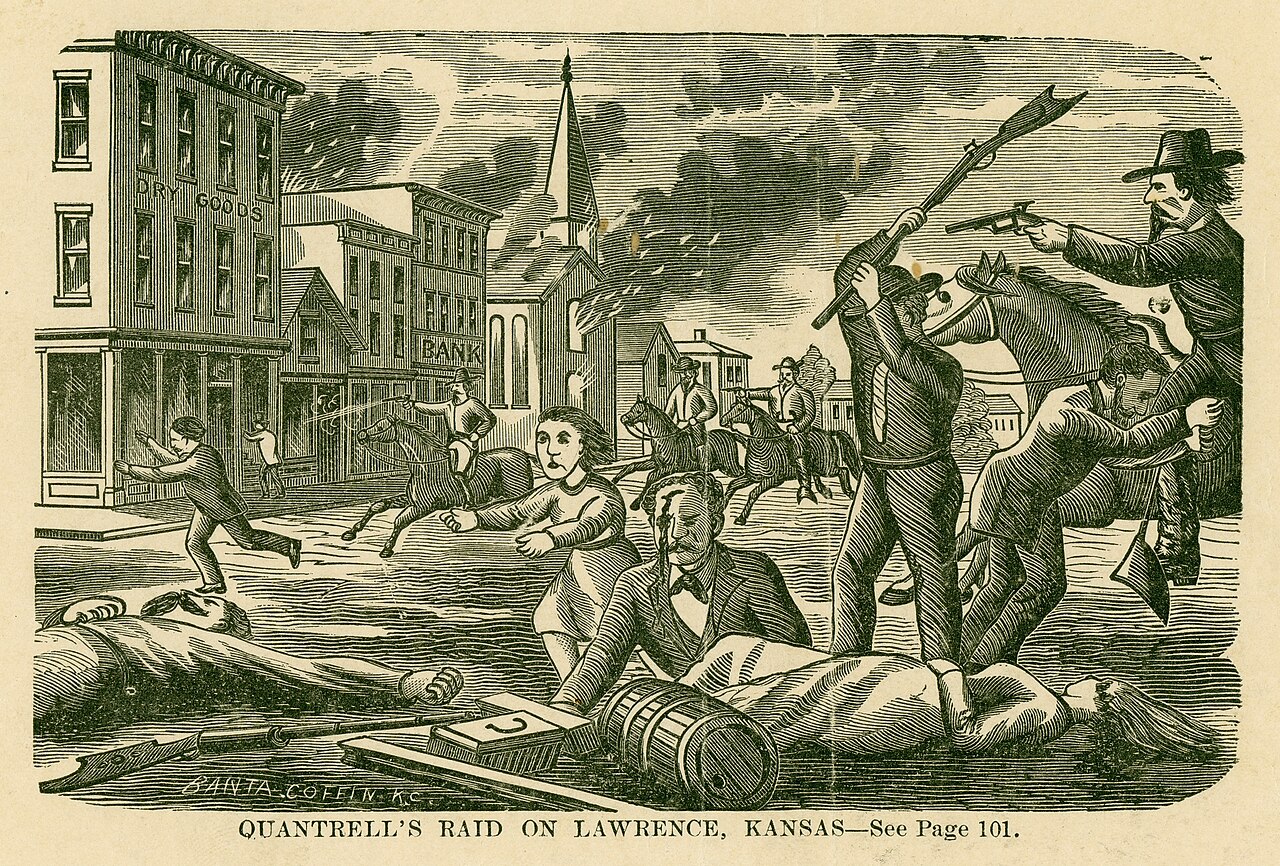
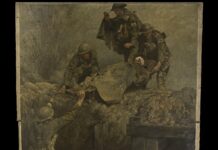
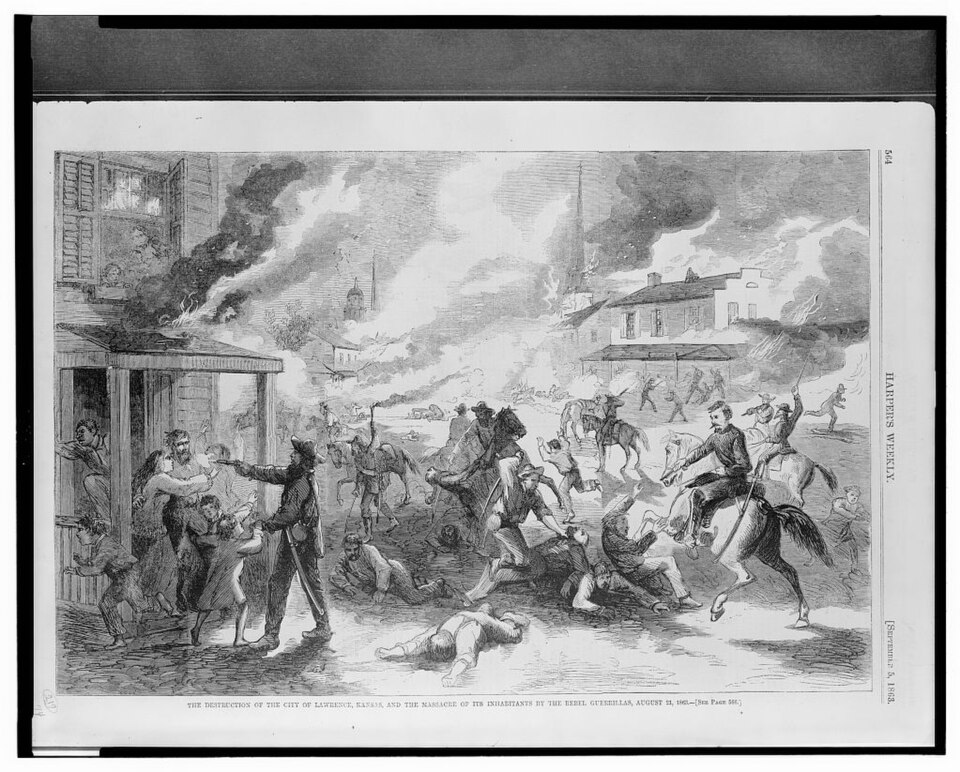
Title: “Quantrill’s Raid on Lawrence, Kansas.”
Quantrill’s most infamous operation came on August 21, 1863, when roughly 400 guerrillas descended upon Lawrence, Kansas, a center of antislavery politics and Jayhawker activity. They burned much of the town and murdered approximately 150 men and boys. Women were generally spared, but husbands and sons were sometimes shot in front of their families. The Lawrence Massacre became one of the Civil War’s most notorious atrocities.
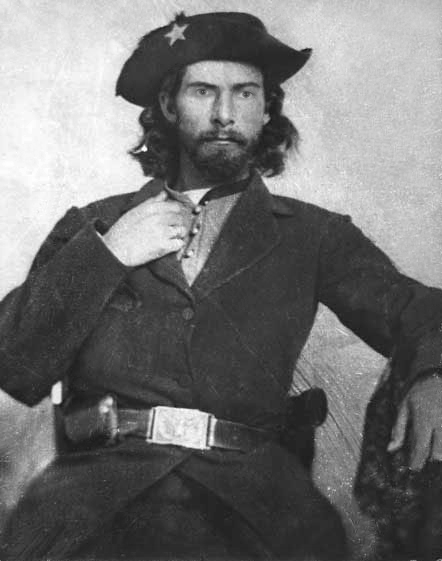
Quantrill’s organization eventually began breaking apart, and one of his most terrifying lieutenants emerged as a leader in his own right: William “Bloody Bill” Anderson.
Anderson represented the increasingly savage nature of the guerrilla war. He reportedly carried the scalps of enemies as trophies and developed a reputation for killing prisoners. Personal tragedy intensified his hatred. In 1863, a building in Kansas City being used to imprison female relatives of Confederate guerrillas collapsed, killing several women, including one of Anderson’s sisters. Guerrillas believed Union authorities were responsible, and Anderson’s campaign became increasingly consumed by vengeance.
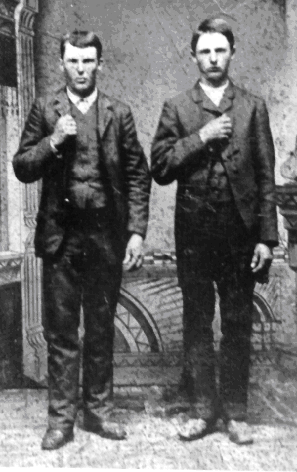
Among the young men riding with Anderson were two brothers whose names would eventually become American legends: Frank and Jesse James. Frank James had joined Confederate forces and later rode with Quantrill’s guerrillas. Jesse, still a teenager, joined Anderson’s band in 1864. They learned warfare not primarily on conventional battlefields but in an environment where disguises, ambushes, surprise attacks, intimidation, and sudden violence were normal.
One episode illustrates just how far the guerrilla war had descended. In September 1864, Anderson’s men attacked Centralia, Missouri, capturing a train and murdering approximately two dozen unarmed Union soldiers aboard it. Later that day, they ambushed pursuing Union troops and slaughtered more than a hundred men. Jesse James later claimed that he had killed the Union commander, although the claim remains uncertain.
Anderson did not survive the war. On October 26, 1864, Union forces set an ambush near Albany, Missouri. Anderson charged directly into the trap and was shot dead. His body was photographed and displayed—an appropriately grim conclusion to one of the Civil War’s darkest careers.
Quantrill survived slightly longer. In 1865, he led a small group east into Kentucky. Union troops eventually cornered him near Louisville in May. Quantrill was shot in the back while attempting to escape and was paralyzed. He died from his wounds on June 6, 1865, only twenty-seven years old.
But the violence did not end with Appomattox.

For men like Frank and Jesse James, guerrilla warfare had become a way of life. After the Confederacy collapsed, the brothers became associated with a network of former Confederate guerrillas who robbed banks, trains, and stagecoaches. The James-Younger Gang transformed wartime tactics into peacetime outlawry. They could disappear into sympathetic communities, depend upon networks of supporters, and portray themselves as Confederate holdouts resisting Northern banks and railroads.
That mythology became enormously powerful. Newspapers and later popular culture turned Jesse James into a kind of American Robin Hood, although the historical reality was considerably less romantic. The James gang’s robberies involved intimidation, violence, and murder. Jesse himself was eventually killed in 1882 by Robert Ford, a member of his own gang hoping to collect a reward. Frank James surrendered later that year and, remarkably, lived until 1915.
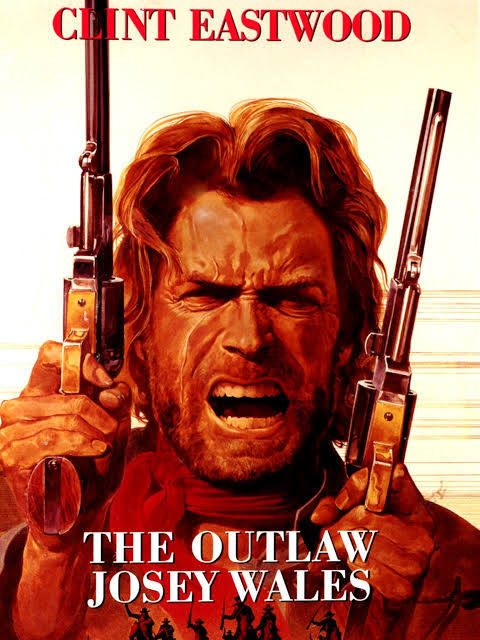
The cultural afterlife of Quantrill’s world is visible in Clint Eastwood’s 1976 film The Outlaw Josey Wales. Josey Wales is fictional, but the world from which his story emerges is very real. Wales is a Missouri farmer whose family is murdered by pro-Union guerrillas. He subsequently joins Confederate bushwhackers and, when the war ends, refuses to surrender.
The film captures something essential about the historical world that produced Quantrill, Anderson, and the James brothers: for some people along the Missouri-Kansas border, the Civil War did not simply end in April 1865. Hatreds remained. Families remembered who had burned their farms, murdered their sons, or imprisoned their daughters. Some former guerrillas returned home. Others became criminals. Still others became legends.

Quantrill’s Raiders therefore occupy a strange place in American history. They were Confederate partisans, guerrilla warriors, perpetrators of atrocities, and the training ground for some of America’s most famous outlaws. Their story also reveals one of the Civil War’s most disturbing truths. Beneath the great armies and famous generals existed another war—a war between neighbors, families, and communities in which politics became personal, violence became vengeance, and the boundary between soldier and outlaw almost disappeared.