
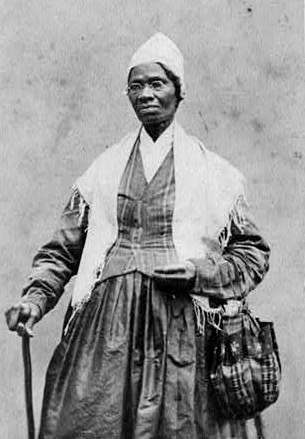
Few Americans have embodied courage, conviction, and unwavering faith like Sojourner Truth. Born into slavery and denied even the most basic human rights, she rose to become one of the most powerful voices of the nineteenth century. Through her commanding speeches, deep Christian faith, and fearless advocacy, Truth helped awaken the conscience of a nation divided over slavery and injustice. Though she never learned to read or write, her words carried extraordinary moral authority because they were rooted in lived experience and a profound confidence in God.
Sojourner Truth was born around 1797 in Ulster County, New York, with the name Isabella Baumfree. Unlike many enslaved people in the American South, she was born into slavery in New York, where gradual emancipation was beginning to reshape the institution. Her childhood, however, was marked by repeated sales to different owners, brutal beatings, and the heartbreak of watching family members torn away. She spoke Dutch as her first language, reflecting the region’s colonial heritage, before eventually learning English.
New York officially abolished slavery in 1827, but Isabella escaped to freedom shortly before emancipation after her owner illegally refused to honor a promise to release her early. Carrying her infant daughter, she found refuge with a Quaker family who helped secure her freedom. Soon afterward, she achieved another remarkable victory by successfully suing for the return of her young son, who had been illegally sold into slavery in Alabama. She became one of the first Black women in American history to win such a case against a white man in court.
The defining force in Truth’s life was her Christian faith. Throughout her years of suffering, she became convinced that God had preserved her for a greater purpose. In 1843, she believed God had called her to leave behind her former identity and devote her life entirely to proclaiming truth. She changed her name from Isabella Baumfree to Sojourner Truth, explaining that “Sojourner” reflected her calling to travel from place to place, while “Truth” represented the message God had given her to proclaim.
Unlike many nineteenth-century reformers, Truth never separated her religious convictions from her public activism. She believed that every person bore the image of God and that slavery was a profound offense against the Creator. Her speeches blended biblical language, personal testimony, humor, and sharp logic. She frequently reminded audiences that Christianity demanded justice, mercy, and compassion—not the defense of human bondage. She sharply distinguished between the teachings of Christ and those who used religion to justify slavery, declaring that true Christianity could never endorse oppression.
During the 1840s and 1850s, Truth became a leading figure in the growing abolitionist movement. She traveled thousands of miles across the northern states, often speaking before hostile crowds where threats of violence were common. As a Black woman speaking publicly in an era when many believed women should remain silent, her very presence challenged deeply rooted prejudices. She possessed a commanding voice and remarkable confidence, refusing to be intimidated by hecklers or critics.
One of her most famous speeches came in 1851 at the Women’s Rights Convention in Akron, Ohio. Although later versions differ somewhat from the exact words she spoke, her repeated challenge—”Ain’t I a Woman?”—became one of the defining statements in American history. She argued that both racial prejudice and sexism violated God’s design by denying the dignity and worth of women like herself. The speech brilliantly united the causes of abolition and women’s rights, demonstrating that freedom and equality belonged to all people.
Truth also worked alongside many of the era’s greatest reformers, including Frederick Douglass, William Lloyd Garrison, and Harriet Beecher Stowe. Although she sometimes differed with fellow abolitionists on strategy, she remained respected for her integrity, courage, and unwavering commitment to justice. During the Civil War she recruited Black soldiers for the Union Army, encouraged President Abraham Lincoln’s efforts to end slavery, and later advocated for land and economic opportunities for formerly enslaved people during Reconstruction.

The dangers she faced cannot be overstated. Traveling alone through a deeply divided nation exposed her to insults, threats, and the constant possibility of physical violence. Yet she believed that if God had called her to speak, no earthly opposition could silence her. Her courage sprang not from fearlessness but from confidence that God was directing her steps.
When Sojourner Truth died in 1883, slavery had been abolished, but the struggle for equality continued. Even so, her influence endured. She demonstrated that a single individual, armed with faith and moral conviction, could challenge one of the greatest injustices in American history. Her life reminds us that lasting social reform often begins with people whose deepest loyalty is not to public opinion or political power but to the conviction that every human being is created by God with equal dignity and immeasurable worth.