Few Native American leaders have inspired as much admiration as Tecumseh and his younger brother, Tenskwatawa, better known as the Prophet. Together, they led one of the greatest efforts in American history to unite dozens of Native nations against the relentless expansion of the United States. One brother wielded words that stirred warriors to action, while the other preached spiritual renewal and resistance to European influence. Their movement briefly threatened to halt American settlement west of the Appalachian Mountains. Yet by the end of the War of 1812, their confederacy lay in ruins, marking one of the decisive turning points in the struggle for control of the American frontier.
The brothers were born into the Shawnee Nation during an age of violence and upheaval. Tecumseh was born around 1768 in the Ohio Country, where Native communities found themselves caught between British and American ambitions. His father was killed fighting colonial militia during the American Revolution, and Tecumseh grew up witnessing villages burned, treaties broken, and Native lands steadily consumed by settlers moving west. These experiences convinced him that the survival of Native peoples depended upon unity rather than individual tribal interests.
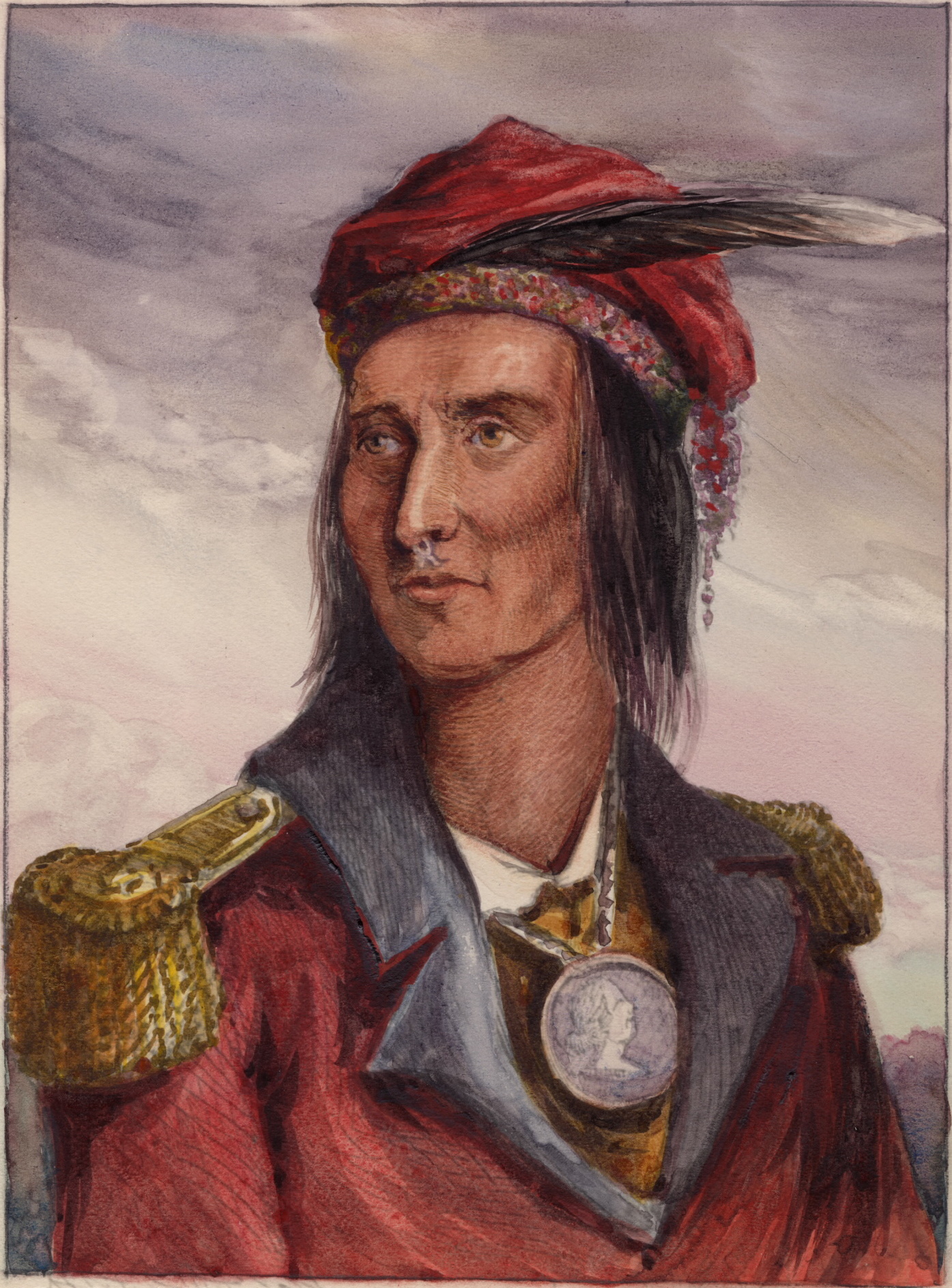
His younger brother, Lalawethika, had a far different beginning. He struggled as a young man, earning a reputation for clumsiness and heavy drinking. Few would have predicted that he would become a religious leader. Everything changed in 1805 when he fell gravely ill and appeared near death. Upon recovering, he claimed to have received visions from the Great Spirit. He declared that Native peoples had abandoned their traditional ways and that their suffering resulted from adopting European customs, alcohol, and manufactured goods. He urged a return to traditional beliefs and became known as Tenskwatawa—“The Open Door”—though Americans simply called him the Prophet.

The Prophet’s message spread rapidly across the Great Lakes and Ohio Valley. Native Americans from many different tribes traveled to hear him preach. He denounced further land sales to the United States and insisted that no single tribe possessed the right to sell territory because the land belonged collectively to all Native peoples. His religious revival became the spiritual foundation for a broader political movement.
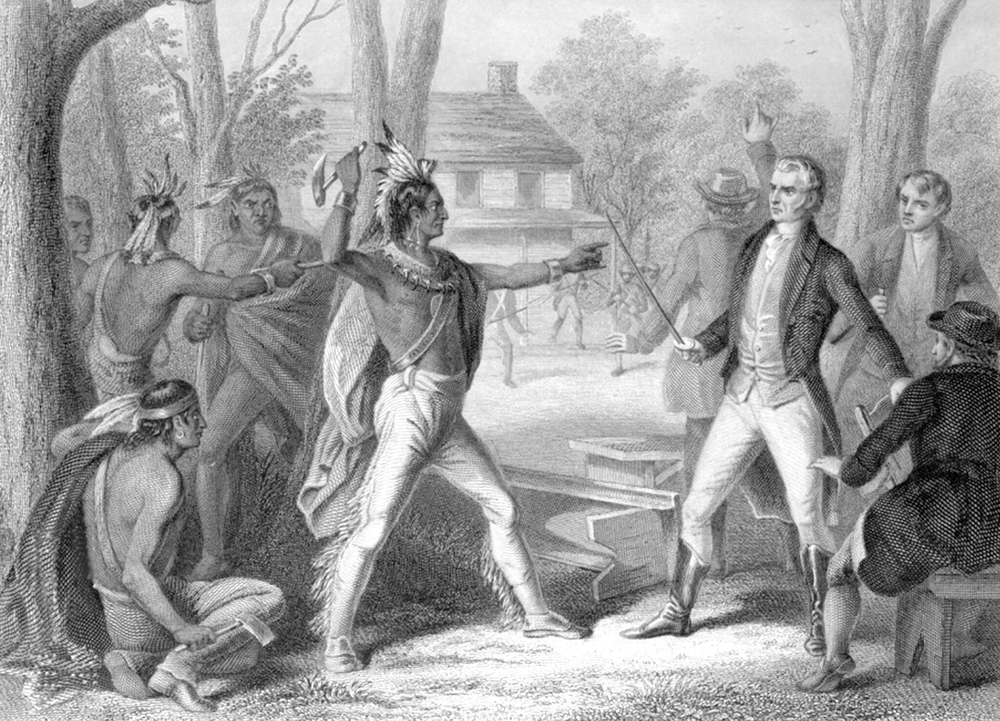
Tecumseh recognized the extraordinary opportunity before them. Unlike his brother, he possessed remarkable military and diplomatic talent. Tall, commanding, and eloquent, Tecumseh traveled thousands of miles to persuade tribes stretching from the Great Lakes to the Gulf Coast to join a grand confederacy. He argued that unless Native nations stood together, they would be defeated one by one as American settlement advanced. His vision was unprecedented: a unified Native alliance capable of resisting the United States as a single political and military force.
The brothers established their headquarters at Prophetstown, near the junction of the Tippecanoe and Wabash Rivers in present-day Indiana. The growing settlement became both a religious center and the capital of Tecumseh’s confederacy. American officials viewed it with increasing alarm. To many frontier settlers, Prophetstown represented not merely another Indian village but the headquarters of an organized resistance movement.
The crisis came while Tecumseh was traveling through the South recruiting additional allies. Indiana Territory Governor William Henry Harrison marched an army toward Prophetstown in November 1811. Although Tecumseh had instructed his followers to avoid battle until he returned, the Prophet believed a surprise attack could drive the Americans away. Assuring his warriors that his spiritual powers would protect them from enemy bullets, he authorized the assault.
The result was the Battle of Tippecanoe, a devastating defeat. Harrison’s troops held their ground against repeated attacks before burning Prophetstown the following day. The loss shattered much of the Prophet’s credibility. Many questioned his visions after his promises of divine protection failed so dramatically. Although Tecumseh remained loyal to his brother, the confederacy never fully recovered from the disaster.
Ironically, the defeat at Tippecanoe helped push the United States closer to war with Great Britain. Many Americans blamed British officials in Canada for supplying Tecumseh’s confederacy with weapons and encouragement. When the War of 1812 began, Tecumseh quickly allied his warriors with the British, believing they offered the best hope of preserving Native independence.
During the early stages of the war, Tecumseh proved indispensable. His partnership with British General Isaac Brock led to the surrender of Detroit in August 1812 without a major battle. Through brilliant deception, Tecumseh repeatedly marched his warriors through clearings to convince the American defenders they faced an overwhelming Native force. The psychological effect contributed to General William Hull’s decision to surrender Detroit, handing Britain one of its greatest victories of the war.
But fortunes soon changed. Brock was killed later that year, depriving Tecumseh of his strongest British ally. New British commanders proved less committed to defending Native lands. As American victories mounted in 1813, British forces retreated into Canada, forcing Tecumseh and his warriors to withdraw alongside them.
The final chapter came on October 5, 1813, at the Battle of the Thames in present-day Ontario. Refusing to retreat further, Tecumseh chose to make a stand. During the fierce fighting, he was killed—likely while leading his warriors in combat. The exact circumstances of his death remain uncertain, but its consequences were unmistakable. With Tecumseh gone, the confederacy collapsed almost immediately. No other leader possessed the authority, charisma, or vision to hold the alliance together.
The Prophet survived for many years but never regained his former influence. His spiritual movement faded, and he spent much of his later life living quietly under American authority. He died in 1836, long after the dream he had shared with his brother had vanished.
Tecumseh and the Prophet ultimately failed to stop American expansion, but their effort remains one of the most remarkable examples of Native resistance in North American history. Tecumseh’s vision of a united Indigenous confederacy challenged the growing United States at one of its most vulnerable moments, while the Prophet inspired thousands to reclaim their cultural identity. Together they left behind a legacy of courage, leadership, and determination that continues to command respect more than two centuries after their rise and fall.