

What Happened.
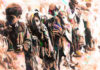
The Ebola outbreak in the Democratic Republic of the Congo has crossed a major threshold, with government data showing 8,067 confirmed infections and 3,901 deaths, making this the largest and deadliest Ebola outbreak in the country’s history and the second-largest recorded globally after the 2014–2016 West African epidemic. The outbreak, caused by the Bundibugyo species of Ebola virus, has now reached 63 health zones across seven provinces. More troubling than the raw totals is evidence that transmission remains poorly mapped: the Africa CDC says more than 80% of new infections are occurring among people who were not previously identified as contacts, while only about 30,000 potential exposures have been traced when officials estimate roughly 420,000 should have been identified. AP NewsAssociated Press — Congo’s Ebola outbreak surpasses 8,000 confirmed cases Reuters — Congo Ebola infections cross 8,000 Al Jazeera — Ebola cases surpass 8,000 as DRC struggles to control outbreak
How This Affects Ordinary People.
Nearly 4,000 people are now dead, health workers themselves are increasingly becoming casualties, and the epidemic is disrupting ordinary medical care well beyond Ebola patients. AP reports that 50 health workers have died, while shortages of personnel, delayed wages and insecurity are weakening the response; routine healthcare use in heavily affected Ituri province has fallen as fear and operational problems discourage people from visiting medical facilities. Communities are also confronting misinformation and deep distrust of treatment centers, contributing to attacks on health workers and public officials. In one particularly stark sign of the deteriorating environment, a Congolese ruling-party official was beaten to death after appearing on radio to promote Ebola prevention measures. AP News Associated Press — Health-worker shortages deepen Congo’s Ebola emergency Reuters — Mistrust fuels a deadly Ebola hotspot in eastern Congo Reuters — Congolese politician killed after promoting Ebola prevention
Why This Matters.
The central danger is that the outbreak is still geographically expanding while surveillance remains unable to reliably identify transmission chains. WHO recently confirmed spread into two additional health zones, including areas near the borders with the Central African Republic and South Sudan, and has warned that conflict and population displacement are making contact tracing and access to affected communities more difficult. The Bundibugyo species presents an additional challenge because there are currently no approved vaccines or treatments specifically for it, although clinical trials are being accelerated. WHO has previously assessed continued transmission in Congo as posing a cross-border risk; cases associated with this outbreak have already occurred outside Congo, including in Uganda. The combination of uncontrolled community transmission, conflict, population movement and weak healthcare capacity gives this epidemic significance well beyond an ordinary national disease outbreak. Reuters World Health Organization — Ebola transmission continues expanding geographically in Congo Reuters — WHO says outbreak has spread into additional health zones Al Jazeera — WHO warns conflict and displacement are complicating containment
What Changed.
Congo’s Ebola epidemic was already a major humanitarian emergency, but three developments now push it across the Global Story Watch threshold: confirmed infections have exceeded 8,000 and deaths are approaching 4,000; the epidemic has become the worst Ebola outbreak in Congolese history; and evidence increasingly indicates that authorities are failing to identify transmission networks before new infections occur. On September 7, WHO reported 6,757 confirmed Congolese cases and 3,267 deaths; the latest government figures are 8,067 cases and 3,901 deaths—an increase of roughly 1,300 confirmed infections and more than 600 deaths in about three weeks. At the same time, new health zones have become infected and Africa CDC says the overwhelming majority of new patients were never on contact lists. The change is therefore not simply another increase in cumulative numbers: it is mounting evidence that a historically large epidemic remains incompletely contained while spreading through communities and toward international borders. World Health Organization World Health Organization — September outbreak assessment documents continued expansion Reuters — Africa CDC warns contact tracing remains far behind transmissionAssociated Press — Congo records its deadliest Ebola outbreak