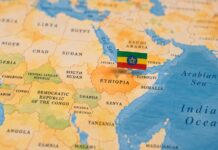


What happened: The Ebola outbreak in the Democratic Republic of Congo has now killed more than 2,500 people, and the United Nations says transmission is becoming exponential across an area larger than France. The warning, issued August 21, marks another significant deterioration in an outbreak that was already the fastest-growing Ebola epidemic on record. (Reuters)
Human cost: Confirmed infections have risen above 5,200, with roughly half of known patients dying. The outbreak has spread through six provinces, while conflict, weak surveillance and attacks on health workers are making containment increasingly difficult. (AP News)
Why it matters: The response is now racing against both the virus and a funding cliff. The U.N. coordinator in Congo says available humanitarian funding may last only a few more weeks. If surveillance, isolation and treatment capacity deteriorate while infections are accelerating, the outbreak could move closer to the scale of the 2014–2016 West African epidemic, which killed more than 11,000 people. (Reuters)
There is one important counter-development: WHO and Africa CDC have authorized the immediate release of 70,000 doses of the Ervebo Ebola vaccine. Twenty thousand will be used in a Phase 3 trial and 50,000 offered to frontline and health workers. Ervebo is licensed against the Zaire Ebola strain, not the Bundibugyo strain causing this outbreak, so whether it protects humans here remains unknown; preliminary laboratory and animal evidence suggests it might. (World Health Organization)
What changed: Three days ago, the outbreak had passed roughly 2,300 deaths. It has now surpassed 2,500, crossed 5,000 confirmed cases, been described by the U.N. as spreading exponentially, and triggered an unprecedented emergency deployment of a vaccine not yet proven against this strain.