

What Happened
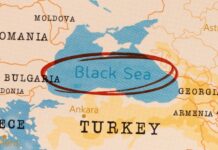
A rapidly expanding Ebola epidemic that has killed more than 4,600 people in Africa has reached Nigeria, raising international concerns that the disease could spread beyond its original outbreak region. Nigerian authorities confirmed their first Ebola case in more than a decade on October 20, involving a woman who arrived in Abuja from Uganda earlier this month. The outbreak began in the Democratic Republic of the Congo in May and has now produced more than 9,700 infections, according to the Associated Press. Cases associated with the outbreak have been reported in five countries: Congo, Uganda, Kenya, Nigeria and France. The disease is caused by the rare Bundibugyo virus, for which no approved vaccine or specific treatment currently exists. On Thursday, October 22, Nigerian Health Minister Muhammad Ali Pate confirmed that the country’s single identified case remains isolated, with no evidence of transmission into the wider community. Nevertheless, authorities are monitoring 44 identified contacts, including healthcare workers. The World Health Organization has already designated the broader outbreak a public health emergency of international concern. The confirmed international spread represents a serious development, although there is no evidence of sustained transmission in Nigeria. Reuters Reuters — Nigeria confirms Ebola case and intensifies contact tracing | Associated Press — Ebola spreads across multiple African countries | WHO — Official outbreak assessment
How This Affects Ordinary People
For thousands of African families, the epidemic has already become a devastating human tragedy, while its continued geographical expansion threatens communities with limited access to healthcare and disease surveillance. The Bundibugyo virus has killed approximately half of those with confirmed infections in the current outbreak. In eastern Congo, where armed conflict and displacement have weakened healthcare systems, families face enormous difficulties obtaining timely treatment. Healthcare workers are particularly vulnerable because Ebola spreads through direct contact with infected bodily fluids, including blood and vomit, or contaminated materials. The disease can also spread during caregiving and traditional burial practices when appropriate protective measures are unavailable. In Nigeria, the infected woman reportedly developed symptoms on October 7 but was not tested for Ebola until October 19, creating concern about possible exposures before her diagnosis. Nigerian authorities have identified 44 contacts and are tracing other potential exposures. For ordinary workers and households, a widening epidemic could disrupt employment, transportation, healthcare services and cross-border commerce. However, those broader economic consequences remain potential risks rather than established effects in Nigeria. The country’s government says there is currently no justification for canceling large public gatherings or imposing widespread restrictions. Reuters Reuters — Delayed diagnosis raises concerns about possible exposure | Associated Press — Humanitarian consequences and healthcare challenges | WHO — Bundibugyo Ebola and its transmission risks
Why This Matters
The epidemic is developing into one of the most consequential international public health emergencies in recent years, demonstrating how armed conflict, population displacement, inadequate healthcare infrastructure and international travel can combine to accelerate the spread of infectious disease. The current outbreak is already the deadliest in Congo’s history and the second-largest Ebola epidemic recorded worldwide. Its expansion into Nigeria is particularly concerning because Abuja is a major international transportation center with extensive connections throughout Africa and beyond. The outbreak has also exposed weaknesses in disease surveillance: several infected travelers were diagnosed only after crossing international borders. Africa Centres for Disease Control and Prevention Director General Jean Kaseya has called for stronger international coordination, while the WHO has urged countries to maintain heightened readiness. The international response is expanding. On October 22, Reuters reported that the United States will require all incoming airline passengers to declare whether they have visited Congo during the preceding 21 days, beginning November 3. This additional screening requirement follows earlier American restrictions involving travelers from affected countries. The danger is not that a worldwide epidemic has already emerged, but that a severe regional outbreak is repeatedly crossing borders despite existing containment measures. No cases associated with the outbreak have been reported in the United States. AP News Associated Press — International spread exposes weaknesses in disease surveillance | Reuters — United States announces additional Ebola travel screening | WHO — International public health emergency declaration
What Changed
The decisive new development is the arrival of Ebola in West Africa, extending an epidemic previously concentrated in Central and East Africa into a new region and prompting additional international protective measures. Until this week, confirmed African cases had been concentrated in Congo, Uganda and Kenya. Nigeria’s confirmation on October 20 established that the virus had reached another major population center through international travel. The significance became clearer on October 21 and 22 as health authorities disclosed the patient’s delayed diagnosis, identified 44 potential contacts and expanded international coordination. Thursday brought two additional developments: Nigerian authorities confirmed that they had found no evidence of community transmission, while Washington announced new mandatory travel declarations beginning November 3. These developments follow an already alarming deterioration in Congo, where confirmed infections increased from approximately 7,900 in late September to more than 9,600 by October 20. The alert threshold has been crossed because an exceptionally deadly epidemic has entered a new African region, exposed vulnerabilities in international disease surveillance and triggered additional government responses. The most important uncertainty is whether Nigerian contact tracing successfully prevents secondary infections. A contained imported case would represent a substantially different outcome from sustained community transmission. The outbreak’s geographical expansion is confirmed; a broader West African epidemic is not. Reuters Reuters — Nigeria’s first confirmed case establishes the new geographical spread | Reuters — October 22 confirmation that the Nigerian case remains isolated | Reuters — New international travel measures announced October 22 | WHO — September outbreak figures provide the earlier comparison
Report timestamp: October 22, 2026, 6:05 PM CT