
Before the Civil War, the United States experienced an explosion of religious experimentation unlike anything in its previous history. The same forces that fueled evangelical revivals during the Second Great Awakening also created fertile ground for entirely new religious movements. Among the most significant of these was Mormonism, formally known as the Church of Jesus Christ of Latter-day Saints. Although it eventually grew into one of the world’s largest new religious movements, Mormonism emerged from a landscape already crowded with competing prophets, visionary leaders, and unconventional sects. Understanding its origins requires understanding the unique religious climate of early nineteenth-century America.
The Second Great Awakening, which stretched roughly from the 1790s through the 1830s, transformed American religion. Traveling preachers held enormous camp meetings where thousands gathered to hear emotional sermons calling for repentance and conversion. Unlike the more orderly Christianity of the colonial era, these revivals emphasized personal religious experience over tradition or established authority. Americans increasingly believed that ordinary people could encounter God directly and receive divine guidance without relying upon centuries of church doctrine.
This democratization of religion had profound consequences. If every believer could interpret Scripture personally, then countless competing interpretations naturally followed. The frontier especially became a laboratory of religious innovation. Baptists and Methodists grew rapidly through circuit-riding preachers, but they were hardly alone. New groups such as the Shakers, who practiced celibacy and communal living, gained followers. The Universalists taught that God’s love would ultimately save all people rather than condemn most to eternal punishment. The Millerites predicted Christ’s imminent return, while various communal societies sought to build perfect Christian communities on earth. The famous “Burned-over District” of western New York earned its nickname because revival fires seemed to sweep repeatedly through the region, leaving behind wave after wave of religious enthusiasm.
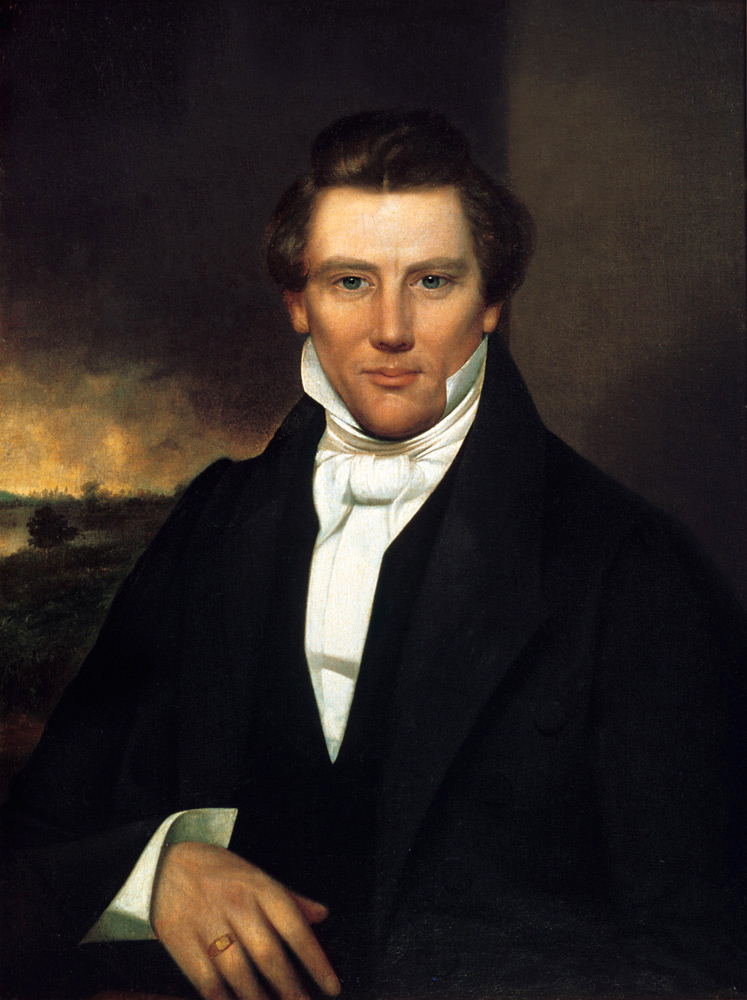
It was in this extraordinary environment that Joseph Smith emerged. Born in 1805 in Vermont and later raised in western New York, Smith came of age amid intense religious competition. Numerous denominations claimed to possess the true gospel, and revival meetings frequently stirred entire communities. According to Smith’s own account, as a teenager he became deeply troubled by the conflicting claims of the various churches. Seeking divine guidance, he prayed in a grove of trees and later reported receiving a remarkable vision in which God the Father and Jesus Christ appeared to him, telling him that none of the existing churches possessed the fullness of the truth.
Smith later claimed that an angel named Moroni directed him to buried golden plates near his home. According to his testimony, these plates contained the history of ancient peoples who had lived in the Americas and their interactions with the risen Christ after His resurrection. Smith said he translated the plates through divine assistance, producing the Book of Mormon, first published in 1830. The book became the foundational scripture of the new movement alongside the Bible.
From the perspective of traditional Christianity, Smith’s claims represented a dramatic departure from historic Christian doctrine. For nearly eighteen centuries, Christians had understood divine revelation concerning salvation to be complete in the biblical canon. The introduction of new scripture, additional prophets, and continuing revelation marked Mormonism as fundamentally distinct from orthodox Christianity. Yet in the atmosphere of the Second Great Awakening, many Americans were willing to consider extraordinary religious claims if they appeared to bear spiritual fruit or offered compelling answers to their questions.
The new movement grew rapidly despite fierce opposition. Smith established communities in Ohio, Missouri, and Illinois, where the Latter-day Saints sought to build a restored Zion. However, tensions with surrounding communities escalated because of political disagreements, economic cooperation within Mormon settlements, theological differences, and eventually the controversial practice of plural marriage introduced among some church leaders. Violence repeatedly forced the Saints to relocate. In 1844 Joseph Smith and his brother Hyrum were killed by a mob while imprisoned in Carthage, Illinois, making Smith a martyr in the eyes of his followers.

Leadership then passed to Brigham Young, one of Smith’s most capable and determined associates. Young proved to be an extraordinary organizer and administrator. Convinced that the Saints would never find lasting peace in the eastern United States, he led thousands of Mormon pioneers on one of the greatest migrations in American history. Beginning in 1846, wagon trains crossed the Great Plains and Rocky Mountains to the isolated Salt Lake Valley, then part of Mexico. Upon arriving in 1847, Young reportedly declared, “This is the right place.”
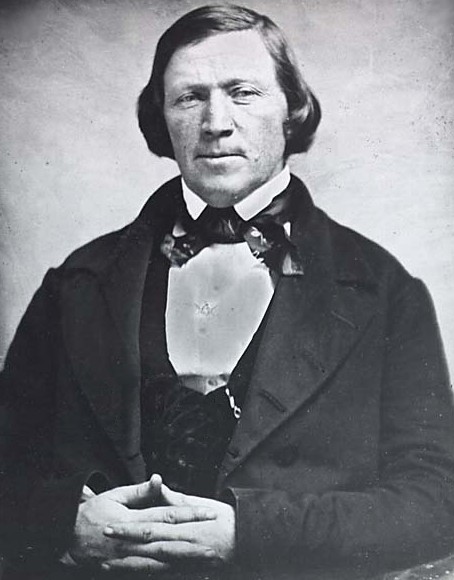
Under Young’s leadership, the Mormon settlement flourished. Irrigation transformed the arid landscape into productive farmland, new towns spread throughout the Great Basin, and the church developed a remarkably organized society. Young served simultaneously as religious leader, civic organizer, and colonizer, directing the establishment of dozens of settlements across the American West. His practical leadership enabled Mormonism not merely to survive persecution but to establish a permanent institutional foundation from which it would eventually expand worldwide.
The rise of Mormonism illustrates both the opportunities and the dangers presented by the religious culture of the Second Great Awakening. The revival era encouraged Americans to seek authentic spiritual experience and to read Scripture with renewed seriousness. These impulses energized evangelical Christianity and inspired remarkable missionary efforts, charitable organizations, and social reforms. At the same time, the weakening of traditional ecclesiastical authority opened the door for charismatic leaders who claimed new revelations and proposed entirely new theological systems.
In that sense, Mormonism was not an isolated phenomenon but part of a much broader wave of religious innovation. It emerged alongside numerous other sects, restorationist movements, and utopian communities that sought to recover what they believed mainstream Christianity had lost. Most of these movements remained small or eventually disappeared. Mormonism, however, combined compelling leadership, a strong sense of shared identity, disciplined organization, and an ambitious missionary vision that allowed it to endure.
The story of Joseph Smith and Brigham Young, therefore, reflects the larger story of the Second Great Awakening itself. The same revival culture that renewed American Protestantism also created an environment in which entirely new religious movements could arise, compete with established churches, and, in some cases, permanently reshape the religious landscape of the United States.