

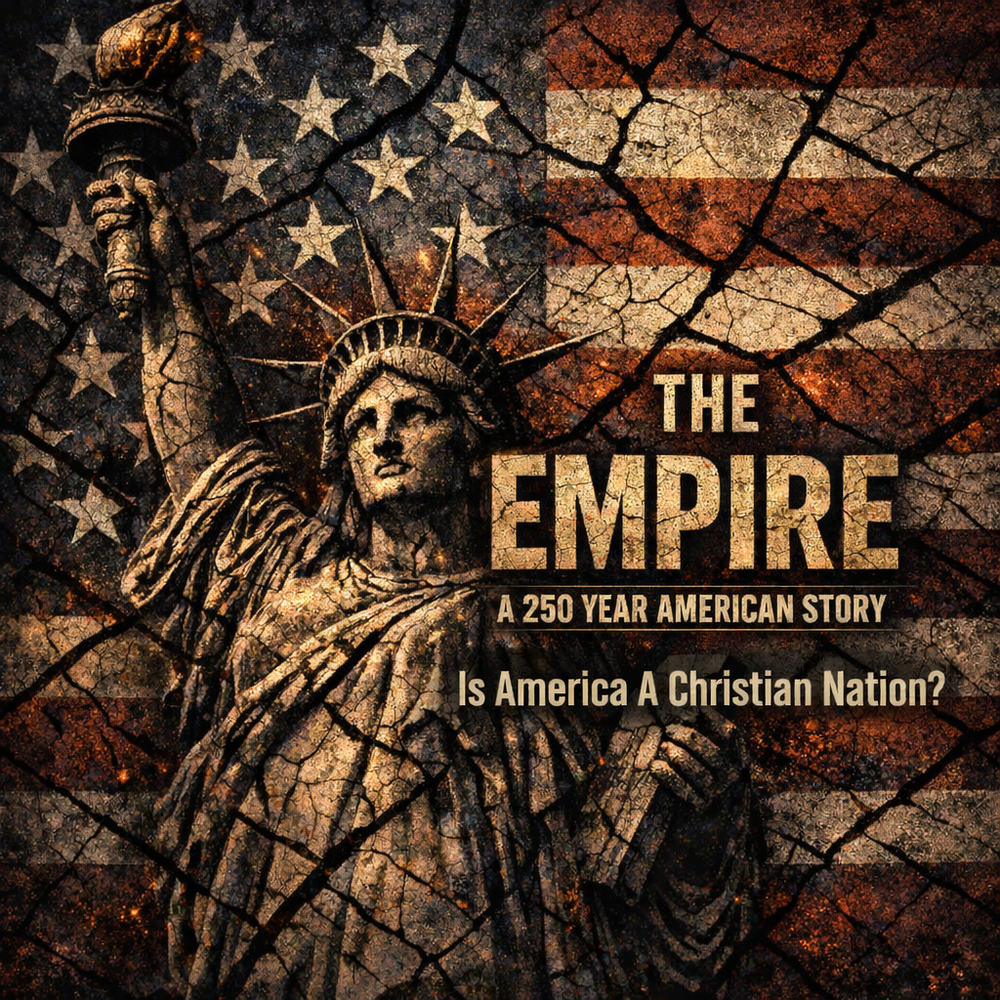
America’s identity has always been wrapped in a tension between faith, history, and national myth. This episode steps back from the chronological march of The Empire: A 250 Year American Story to revisit one of the series’ central questions: Is America a Christian nation? Rather than leaning on assumptions or familiar slogans, the episode digs into the early chapters of American history—its settlers, its founders, and the competing visions that shaped the new republic.
Drawing from the era of discovery, the rise of colonial settlements, and the aftermath of the Revolution, the discussion explores why the answer isn’t as simple as pointing to the Pilgrims’ religious devotion or the founders’ personal beliefs. The document notes how early colonists often carried sincere faith alongside deeply flawed actions, and how later generations would struggle to reconcile those contradictions. It also highlights how the Constitution’s authors intentionally avoided establishing a national religion, shaped by the violent religious conflicts they had witnessed.
Yet the episode also uncovers a different kind of Christian influence—one rooted not in official declarations but in the lived experience of ordinary people. The early nation became a refuge for those who were poor, marginalized, or spiritually hungry, creating space for faith to flourish freely. That dynamic, rather than political design, becomes the lens through which the episode reframes the question.
Instead of offering a final verdict, the episode invites listeners into an ongoing exploration—one that will evolve as the series moves toward the Civil War and beyond.





[…] Is America a Christian Nation (part 1) – A pause in our series to revisit one of our original questions and consider the possible answers at this point in the story. […]
Comments are closed.