Home Blog Page 4

We Would Have Been Pilgrims

0
Reading Time: 3 minutes

I’ve been doing a lot of reading about early American history lately, in preparation for a podcast series coming in 2026. This month, my focus has unintentionally shifted to the Puritans and Pilgrims who traveled to the New World to escape religious persecution in Europe. We often reduce these early religious pioneers to caricatures—funny hat-wearing dandies unprepared for the hardships of the wilderness and saved by Native Americans at the first Thanksgiving. Even worse, many modern depictions of the Pilgrims often demonize their fundamentalist views on God and life.

As I have sorted through the historical stories and facts, I realize I share much more in common with the Pilgrims than I initially thought, especially their willingness to approach their faith with a sobriety and conviction that often went against and even broke the social norms of those around them. When I consider the community of believers I walk with today, four hundred years after the Pilgrims arrived in the New World, the thought keeps resonating in my mind: “We would have been Pilgrims!”

The Pilgrims lived through dark and perilous times. The religious wars across Europe lasted for generations. A fierce nationalism had penetrated both Catholic and Protestant communities. Many of those Pilgrims who traveled to the New World grew up reading Foxe’s Book of Martyrs, which documents Christians who died for their faith, including those murdered during Queen Mary I’s reign, a Catholic ruler nicknamed Bloody Mary. Although Mary’s successors showed more tolerance, the dangers persisted, especially for those who refused to compromise their religious beliefs and principles.

The Pilgrims saw a corrupt and defiled religious system, not only among the Catholics but also within the state-supported Church of England. They were committed to a pure reading of scripture and wanted to avoid any religious practice that compromised that purity. When taking communion, they refused to kneel, as they saw no evidence that the apostles in the New Testament did so. They viewed images of the cross in many churches as signs of idolatry. They rejected the church’s hierarchy and the veneration of saints. They also despised the Book of Common Prayer. To the Pilgrims, all these things distracted from God’s truth in scripture. Because of this, they separated themselves from the Church of England, becoming outlaws in the eyes of many.

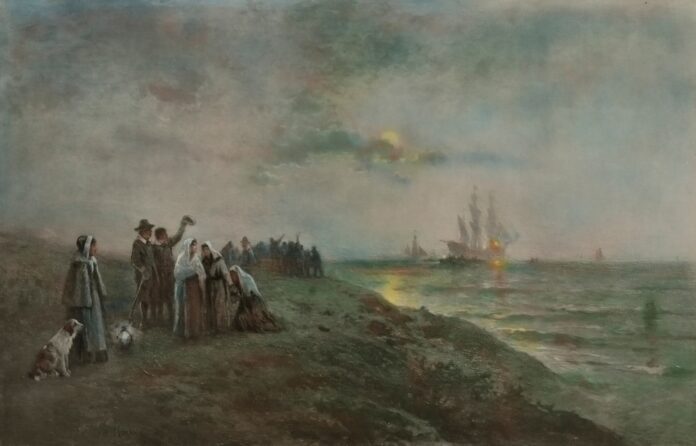
In 1620, the Pilgrims set sail on the Mayflower seeking a place to worship freely and create a “model Christian society.” Persecuted in England and unhappy with life in Holland, they believed God called them to the New World. Once there, they drafted the Mayflower Compact, a covenant invoking God’s authority and Scripture as the basis for self-governance.

We know the story of the first Thanksgiving. The Pilgrims’ faith carried (some of) them through the devastating first winter, when half of their number died in harsh conditions. Survivors saw their suffering as a test of obedience, much like Israel’s trials in the wilderness. They lived spiritual lives, prioritizing the call of God above everything else – and they sacrificed greatly for such a way of life. Daily prayer, Scripture reading, and reliance on God became their lifeline.

By pioneering Plymouth Colony, the Pilgrims showed how religious beliefs could influence political, social, and spiritual life. Their legacy was not just about survival but about creating a community where faith in God and the Bible guided every choice, laying the groundwork for future religious freedom in America.

The timing of these readings and the celebration of Thanksgiving today felt too coincidental for me not to take a moment to consider and reflect for those who follow the blog and newsletter here at theeendofhistory.net.

The Pilgrims were not perfect people, and their understanding of God’s purposes and plans often remained limited by their own biases. However, they still represent part of the spiritual heritage for those who seek God’s truth above all else and are willing to make sacrifices in pursuit of it.

Interested in reading some of the books I have been reading lately? Here is a link to those books:

Mayflower: A Story of Courage, Community and War

Roger Williams and the Creation of the American Soul: Church, State, and the Birth of Liberty

The American Puritans

In the Beginning was the Word: The Bible in American Public Life 1492-1783

Entrapment

0
Reading Time: 3 minutes

Entrapment is a legal concept that means law enforcement encouraged or induced the accused to commit a crime they would not have otherwise committed without such inducement. If the accused can prove that law enforcement used entrapment to show them guilty of a crime, it usually results in an acquittal.

This idea appeals to our tilt towards fairness in the justice system. No one should be allowed to set us up for failure. But such rules of fair play do not apply when it comes to the draw of sin and our personal struggle for righteousness. As we have already seen in this series on desire, sin is born when temptation conceives with our own desires. That temptation does not care at all about fairness. As long as our personal desires provide a ready audience, temptation will call again and again, nudging us toward the prospects of sin.

We first find this reality demonstrated in the story of Cain and Abel. The demonstration and God’s speaking in Genesis 4 is so vivid that it feels as if God is telegraphing to us the significant role desire plays in our vulnerability to sin.

We are familiar with the background to this story. Adam and Eve’s two sons, Cain and Abel, are very different kinds of men. One is a man of the field, raising crops. The other is a shepherd raising animals. One is pursuing God, the other seems threatened by God. One day, they both offer individual offerings to the Lord. God finds Abel’s offering pleasing, but He is not pleased with Cain’s offering. As a result of this, an angry bitterness began to fill and dominate Cain’s soul. That is when God intervenes, not violating the free will of Cain in this dangerous situation, but warning the man with His cautionary Word.

So the LORD said to Cain, “Why are you angry? And why has your countenance fallen?  If you do well, will you not be accepted? And if you do not do well, sin lies at the door. And its desire is for you, but you should rule over it.” Genesis 4:6-7

We have a responsibility to master our desires and to rule over the temptation of sin. A contest is taking place even today in our souls. It is a contest for which forces and standards will rule over us.

For Cain, and many of us as well, fear, self-loathing, and the seeds of bitterness govern our souls. Such a state is terribly fertile ground for temptation and sin. Sin is lying at our door, or as another translation says, crouching at the door waiting to pounce. It is a trap, and as long as such an environment persists within our soul, we are vulnerable to the baited trap that sin and darkness have set for us.

God encouraged Cain to do well. This phrase comes from the Hebrew word yatab. It means to be accepted or pleasing. When it comes to finding acceptance before God, we must always start with the heart, not outward actions or works. That is the secret of where Cain went wrong. The man who would become mankind’s first murderer failed, not because of the sacrifice he offered to God but because of the heart behind that sacrifice. The book of Hebrews clarifies this for us.

By faith Abel offered to God a more excellent sacrifice than Cain, through which he obtained witness that he was righteous, God testifying of his gifts; and through it he being dead still speaks. Hebrews 11:4

While Abel presented a faith-based confidence that God would find him and his sacrifice acceptable and pleasing, Cain presented the opposite. He anticipated failure. He predicted displeasure.

The American pop artist Michael Johnson wrote and sang a song in the 1990s called Cain’s Blood. In the first verse, he sang, “Half of my blood is Cain’s blood, half of my blood is Abel, One eye looks to heaven, And one eye looks for trouble.” Most of us carry this split reality and motivation within our souls. We want what is right and good, but we anticipate the worst – much like Cain did. This wrong perspective makes our souls fertile ground for the entrapment of sin.

If we are to be free from the corrupting desires and the snare of sin that destroy us, we must resolve this internally split nature. Resolution is found not only in correct desires but in the healing of the heart and soul. We must recognize that Cain missed what Abel obtained – God has accepted us!

As the book of Hebrews tells us, faith is the pathway for this healing. Recognizing His acceptance through the sacrifice of Christ and then living in that reality, free from our fear of the worst, our dread of failure, our suspicion of God’s displeasure, this is the escape out of the entrapment of corrupt desire and the dangers of sin. It is the beginning of freedom, truth, and a life of peace.

Homework: I highly recommend a reading of Hebrews 11 and 12 this week as you consider these thoughts.

A House of Dynamite (Review)

0
Reading Time: 3 minutes

If you haven’t seen it yet, I highly recommend you watch it. “A House of Dynamite” currently available only on Netflix, in the last couple of months. It is the latest film made by Kathryn Bigelow. Some of her past hits you might be familiar with include “Zero Dark Thirty,” and “The Hurt Locker.” She has a unique and effective way of making extremely political movies that somehow avoid feeling partisan or preachy. The audience is invited into the situation and left to consider for themselves what is going on and what, if anything, should change.

“House of Dynamite” is a riveting, ethically charged thriller that explores the terrifying fragility of nuclear deterrence and the moral paralysis of leadership under extreme pressure. Without revealing plot details, the film invites viewers to wrestle with questions of responsibility, retaliation, and the human cost of strategic ambiguity.

Last year I read the book Nuclear War by Annie Jacobsen. I highly recommend this read alongside the movie. It is a case study scenario and minute by minute account of how a nuclear attack could unfold in the US. After watching “A House of Dynamite” I have to believe they relied on this book as a key source.

Kathryn Bigelow’s House of Dynamite is not just a suspenseful drama—it’s a cinematic pressure cooker that forces audiences to confront the ethical dilemmas embedded in modern nuclear policy. Set during an 18-minute window following the detection of an unidentified missile headed toward U.S. soil, the film unfolds in real time through multiple perspectives: military officers, political advisors, and the President himself. This fragmented narrative structure heightens the sense of chaos and urgency, while also emphasizing the decentralized nature of decision-making in moments of existential crisis.

What makes A House of Dynamite so morally provocative is its refusal to offer easy answers. The film’s central question—how should a government respond to a potentially catastrophic attack when the perpetrator is unknown—echoes real-world debates about deterrence, proportionality, and the ethics of preemptive retaliation. The ambiguity surrounding the missile’s origin is not a narrative oversight but a deliberate choice by screenwriter Noah Oppenheim. As he explained, the goal was to highlight systemic vulnerability rather than villainize a specific actor.

This choice reframes the story from a geopolitical whodunit to a philosophical meditation on power and responsibility. The characters, from the stoic Captain Olivia Walker (Rebecca Ferguson) to the emotionally torn Secretary of Defense Reid Baker (Jared Harris), embody different ethical frameworks. Some advocate for immediate retaliation, arguing that deterrence only works if threats are met with force. Others plead for restraint, fearing that a miscalculation could trigger global annihilation. These tensions reflect real-world dilemmas faced by nuclear powers, especially in an era of weakened arms control agreements and rising authoritarianism.

The film also explores the psychological toll of leadership under duress. The President, played by Idris Elba, is portrayed not as a heroic savior but as a deeply contemplative figure wrestling with the weight of irreversible decisions. I found myself annoyed with the character of the president. He seemed so “not up” to the job. After watching the movie I wondered if that was a deliberate choice by the director and actor. What kind of representative of the people could possibly be up for this job and decision?

One of the film’s most haunting themes is the illusion of control. Despite the advanced technology and elaborate protocols depicted, the characters are repeatedly confronted with the limits of their knowledge and the unpredictability of outcomes. A failed missile interception, a misread intelligence report, a missed phone call—each moment underscores how fragile the machinery of national defense can be. This vulnerability is not just logistical but ethical: how can leaders make morally sound decisions when the facts are incomplete and the stakes are apocalyptic?

A House of Dynamite also critiques the normalization of existential threats. The film opens with mundane scenes—a sick child, a morning commute, casual banter in the Situation Room—only to be shattered by the sudden detection of a missile. This juxtaposition serves as a chilling reminder of how easily catastrophe can erupt from routine. It also raises questions about societal desensitization: have we become too comfortable living under the shadow of nuclear annihilation?

The ethical questions posed by the film extend beyond the immediate crisis. It challenges viewers to consider the long-term consequences of policy choices, the moral hazards of secrecy, and the human cost of strategic ambiguity. Should nations maintain massive arsenals if their use could be triggered by error or misinterpretation? Is it ethical to retaliate against a suspected aggressor without definitive proof? What responsibility do leaders have to prioritize diplomacy over dominance?

In the end, A House of Dynamite is less about what happens than about what could happen—and how we choose to live with that possibility. It’s a film that doesn’t preach but provokes, inviting viewers to sit with discomfort and reflect on the moral architecture of global security.

The Good Life

0
Reading Time: 4 minutes

In this week’s Monday Morning Devotional, we shift slightly from our study of desire to explore the idea of a quality life. The main purpose of desires and their fulfillment, it seems, is to build the good life. But what exactly is the good life, according to scripture?

For years, I have studied various philosophers, their works, and ideas in an effort to better develop and cultivate my own perspective and understanding of truth and life. Deeply embedded within the work of nearly all Western philosophy is the idea that the objective of life is the attainment of happiness. Philosophers throughout history have rarely disagreed on this presumed objective, but only on how it is to be achieved.

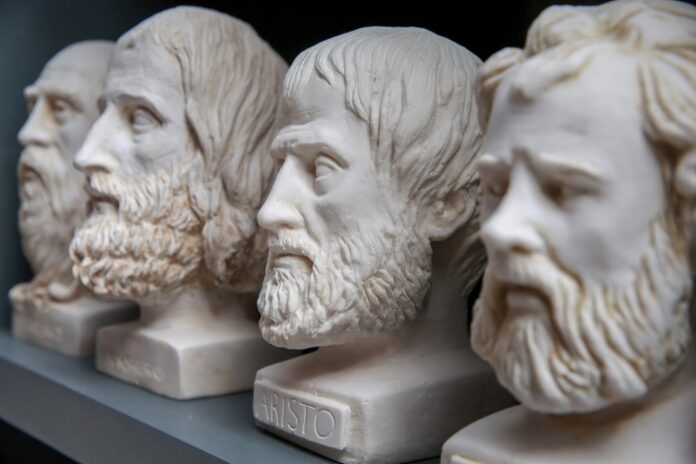
The ancient Greek philosopher Plato believed happiness comes from cultivating four key virtues: wisdom, courage, moderation, and justice. Happiness is about reaching the highest level of self-actualization. Notably, this includes the ability to control personal desires. According to Plato, “The man who makes everything that leads to happiness depend upon himself, and not upon other men, has adopted the very best plan for living happily.”

His disciple, Aristotle, believed happiness was the main goal and purpose of life. He taught that it is achieved by living a life of virtuous activity guided by reason. He said, “Happiness is the meaning and the purpose of life, the whole aim and end of human existence.”

The Roman Emperor and Stoic philosopher Marcus Aurelius believed that happiness is found in accepting fate and living according to nature and reason. In true Stoic fashion, he thought that virtue is the only true good and external circumstances are irrelevant to the genuine pursuit of happiness.

Including Christianity in the discussion, Thomas Aquinas believed that true happiness could only be achieved in heaven through a perfect vision of God.

The Enlightenment philosophers advanced the pursuit of the good life, emphasizing happiness as a key goal. John Locke, a philosopher influential in America’s founding and revolutionary era, saw happiness as a natural right connected to liberty and personal fulfillment. His ideas are reflected in America’s Declaration of Independence, where Thomas Jefferson stated that all men are entitled to “life, liberty and the pursuit of happiness.”

Immanuel Kant took a bold, contrarian step in philosophy by arguing that happiness is not the highest goal in life, but rather moral goodness is. However, he recognized that humans naturally pursue happiness, even if virtue alone doesn’t guarantee it. In other words, a virtuous life doesn’t ensure happiness—though, in a just world, it should.

In my opinion, the most influential philosophical figures behind the idea of happiness as the ultimate goal in life are utilitarian philosophers Jeremy Bentham and John Stuart Mill. They argued that the highest good and morality are based on what brings the most happiness to the greatest number. These ideas are still reflected today in everything from democratic and socialist politics to pop music. As Sheryl Crow once sang, “If it makes you happy, it can’t be that bad.”

As I explored these ideas and philosophies, a thought occurred to me—Is this assumption even correct? Is happiness truly the goal and standard for a good life? I realize this idea is so ingrained in our culture and ideologies that it takes effort to pause and consider whether it is right or not.

The problem is that happiness seems like a very Western goal. Maybe that’s not quite right. Happiness is often a goal for those who are already prosperous. I think about a Sudanese woman risking rape and death to bring water home for her children. How many times a day does she reflect on her happiness? Is that really what matters? What about an immigrant traveling from South America, trying to cross into the U.S.? Is he seeking happiness, or is he after food, safety, and support for his family?

As I examined the validity of our assumption about the happiness goal, I looked to scripture. Surprisingly, the word “happy” is mentioned fewer than 30 times in the King James Version of the Bible.

Our personal desires are generally rooted in the pursuit of personal happiness, but from a scriptural perspective, happiness is a pretty low priority in life. That is what God seems to be saying about it anyway.

There is a word that we, unfortunately, closely associate with happiness and that is frequently used in the Bible when describing what is often considered the goal of the kingdom lifestyle. That word is “blessed.” (For the curious, it appears over 300 times in scripture.) I say unfortunate because, in our modern religious language, the word “blessed” has been reduced to little more than a greeting and a synonym for happy.

Question: “How are you doing?”

Answer: “Oh, I’m blessed.”

It means little and everything, all at once.

The “blessed” life described in scripture is quite different from happiness and is definitely unique in how it connects to our personal desires. A careful study of the word blessed in scripture shows it to mean a life that has God’s attention. That might include prosperity and satisfaction in this world, but it can also mean contentment amid poverty and fulfillment amid loss.

As Jesus described in the Beatitudes from the Sermon on the Mount, “blessed are those who mourn, blessed are those who are persecuted, blessed are the meek…” and so on. The blessed life is the life that God looks upon with favor because we have found something special in this life. That something special is His attention.

This was the life Abraham modeled for us. It was the life that David surprises us with. It is the life of greatness, the good life if you will, for the citizens of the Kingdom of God. The good life is not fueled by our desires or our pursuit of happiness. The truly good life is driven by a desire to live in the favor of God’s sight.

The Old Testament priests would pray over the children of God and evoke an image that captures this idea.

And the LORD spoke to Moses, saying: “Speak to Aaron and his sons, saying, ‘This is the way you shall bless the children of Israel. Say to them:

“The LORD bless you and keep you;

The LORD make His face shine upon you,

And be gracious to you;

The LORD lift up His countenance upon you,

And give you peace.“‘

“So they shall put My name on the children of Israel, and I will bless them.”

Numbers 6:22-27

My desire, our desire as God’s people, should not be for our personal happiness or desires. Instead, it should be for His blessing. His blessing is defined as His attention and gaze upon our lives.

This article was initially published as our Monday Morning Devotional.

The US and Venezuela: A History of Intervention, Oil, and Political Tension (Part 4)

0
US and Venezuela
Reading Time: 2 minutes

The relationship between the US and Venezuela has been shaped by centuries of intervention, oil interests, and political conflict. From the early 19th century, the US invoked the Monroe Doctrine to assert dominance in Latin America, influencing Venezuela’s sovereignty. In 1895, the US mediated a boundary dispute between Venezuela and British Guiana, signaling its growing role in regional affairs.

As Venezuela’s oil industry expanded in the 20th century, American corporations like ExxonMobil and Chevron dominated production. By the 1930s, foreign companies controlled 98% of Venezuela’s oil output, reinforcing economic dependency. Environmental degradation and exploitation followed, while US-backed regimes prioritized foreign investment over local development.

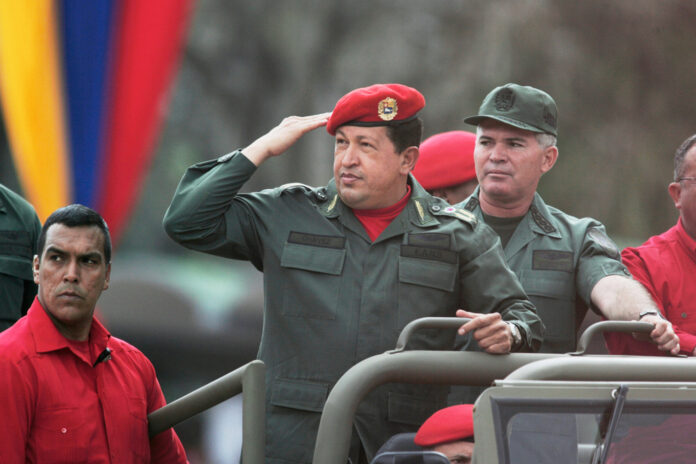
During the Cold War, the US supported anti-communist leaders in Venezuela, including dictator Marcos Pérez Jiménez. Covert operations and economic aid helped suppress leftist movements, shaping Venezuela’s political landscape. This legacy fueled skepticism and anti-US sentiment, especially under Hugo Chávez.

In 2002, Chávez was briefly ousted in a coup allegedly supported by US officials. Relations deteriorated as Chávez expelled diplomats and aligned with Cuba, Russia, and Iran. US sanctions intensified under Presidents Obama, Trump, and Biden, targeting Nicolás Maduro’s regime for corruption and repression.

Sanctions have crippled Venezuela’s economy, contributing to hyperinflation, food shortages, and mass migration. Over 7 million Venezuelans have fled since 2015, with many arriving at the US border. Despite efforts to pressure Maduro, regime change has not occurred.

In 2025, tensions escalated as President Trump deployed naval assets near Venezuela, raising fears of military intervention. The US and Venezuela remain locked in a geopolitical struggle, with oil, ideology, and human rights at the center.

Understanding the US and Venezuela is essential to grasp the roots of Latin America’s instability and the global consequences of foreign policy decisions.

Venezuela’s Modern History: Oil, Revolution, and Political Turmoil (Part 3)

1
Reading Time: 2 minutes


Venezuela’s modern history is a turbulent saga shaped by oil wealth, charismatic leaders, and deep political divisions. After Simón Bolívar’s death in 1830, Venezuela entered a cycle of military rule and fragile democracy. The discovery of oil in 1914 transformed the nation, positioning it as a global energy powerhouse with the world’s largest proven reserves—over 303 billion barrels concentrated in the Orinoco Belt.

Dictator Juan Vicente Gómez (1908–1935) centralized power and welcomed foreign oil interests, laying the groundwork for Venezuela’s petro-state. The mid-20th century saw democratic reforms and economic growth, but dependency on oil led to vulnerability. The 1989 El Caracazo uprising exposed deep inequalities and shattered public trust, setting the stage for Hugo Chávez’s rise.

Chávez, a former military officer, led a failed coup in 1992 but gained national attention with his “por ahora” speech. Elected president in 1998, he launched the Bolivarian Revolution, promising justice and sovereignty. His populist policies, funded by oil revenues, reduced poverty but created economic instability. Nationalizations, price controls, and mismanagement eroded Venezuela’s infrastructure and productivity.

Chávez’s death in 2013 ushered in Nicolás Maduro, whose presidency has been marked by economic collapse, hyperinflation, and mass emigration. Over 7 million Venezuelans have fled since 2015. Maduro’s authoritarian tactics—militarizing institutions, suppressing dissent, and manipulating elections—have drawn global condemnation.

Venezuela’s modern history reflects a paradox: immense natural wealth paired with political and economic dysfunction. From oil booms to revolutionary promises, the nation’s trajectory underscores the dangers of centralized power, corruption, and overreliance on volatile resources. Understanding Venezuela’s modern history is essential to grasp the roots of its current crisis and the global implications of its future.

Venezuela’s Foreign Policy

0
Venezuela's foreign policy
Reading Time: 4 minutes


While the popular opposition to a possible US war with Venezuela cites Venezuela’s oil and gas, a more likely cause of US ire involves Venezuela’s foreign policy.

Venezuela’s Strategic Alliances with Iran, Russia, China—and Their Impact on U.S. Relations

Venezuela’s foreign policy over the past two decades has undergone a dramatic transformation. Once a relatively cooperative partner of the United States, Venezuela has increasingly aligned itself with nations that challenge U.S. global influence—namely Iran, Russia, and China. These relationships have reshaped Venezuela’s geopolitical posture, deepened its economic dependencies, and intensified tensions with Washington.

The Shift Away from the U.S.

Historically, Venezuela maintained strong economic ties with the United States, particularly through oil exports. American companies like ExxonMobil and Chevron were deeply embedded in Venezuela’s energy sector throughout the 20th century. However, the rise of Hugo Chávez in 1999 marked a turning point. Chávez’s Bolivarian Revolution emphasized anti-imperialism, social justice, and Latin American sovereignty—values that clashed with U.S. foreign policy priorities.

Chávez accused the U.S. of exploiting Venezuela’s resources and interfering in its domestic affairs. His rhetoric intensified after the 2002 coup attempt, which briefly removed him from power. Though the U.S. denied involvement, reports of meetings between American officials and opposition leaders fueled suspicions. This event catalyzed Venezuela’s pivot toward alternative global partners.

Russia: Military and Strategic Depth

Russia has become one of Venezuela’s most important allies. The two nations share a mutual interest in countering U.S. influence, and their partnership spans military cooperation, energy development, and diplomatic support.

  • In 2025, Venezuela and Russia formalized a strategic partnership covering energy, mining, transport, and security.
  • Russia has supplied Venezuela with military equipment, including fighter jets and air defense systems, and has trained Venezuelan forces.
  • Moscow has also supported Venezuela in international forums, opposing U.S. sanctions and defending Nicolás Maduro’s legitimacy.

This alliance has given Venezuela a powerful backer on the global stage, but it has also heightened U.S. concerns about Russian influence in the Western Hemisphere—a region traditionally considered within America’s sphere of influence.

China: Economic Lifeline and Oil Partner

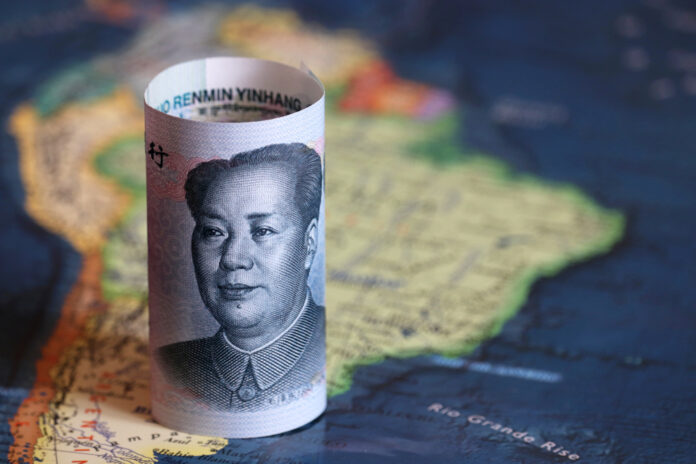
China’s relationship with Venezuela is primarily economic, but no less strategic. As Venezuela’s largest creditor and oil customer, China has become a critical lifeline for the country’s struggling economy.

  • China has invested billions in Venezuela’s infrastructure, telecommunications, and oil production, often through loan-for-oil agreements.
  • As of 2025, China imports roughly 90% of Venezuela’s oil exports, making it the country’s most important energy partner.
  • Chinese firms have helped modernize Venezuela’s oil extraction and refining capabilities, particularly in the Orinoco Belt, which contains vast reserves of extra-heavy crude.

However, China’s support is not unconditional. Beijing has grown wary of Venezuela’s instability and has slowed new investments. Still, China’s continued engagement provides Maduro with economic breathing room and a counterweight to U.S. sanctions.

Iran: Ideological Ally and Tactical Support

Iran and Venezuela share a deep ideological bond rooted in anti-Americanism and resistance to Western hegemony. Their partnership has expanded in recent years, particularly in areas of energy, intelligence, and evasion of sanctions.

  • Iran has sent fuel shipments to Venezuela during times of acute shortages, defying U.S. sanctions.
  • The two countries have collaborated on joint ventures in refining and petrochemicals, helping Venezuela maintain minimal energy production.
  • Intelligence cooperation has reportedly increased, with Iran assisting Venezuela in cybersecurity and surveillance technologies.

This alliance has alarmed U.S. policymakers, especially given Iran’s history of supporting proxy groups and its adversarial stance toward Washington. The presence of Iranian operatives in Latin America is viewed as a strategic threat by American defense officials.

Other Regional and Global Partners

Beyond Iran, Russia, and China, Venezuela has cultivated reported ties with Cuba, Nicaragua, and Turkey. These relationships are often symbolic, reinforcing Venezuela’s narrative of resistance against U.S. imperialism.

  • Cuba provides intelligence and medical personnel, helping Maduro maintain internal control.
  • Nicaragua and Bolivia have supported Venezuela diplomatically in regional forums.
  • Turkey has engaged in limited trade and gold transactions, offering economic alternatives amid sanctions.

These partnerships, while not as robust as those with Russia or China, contribute to Venezuela’s global network of support and complicate U.S. efforts to isolate the regime.

Impact on U.S.–Venezuela Relations

The deepening ties between Venezuela and U.S. adversaries have profoundly strained bilateral relations. The U.S. views Venezuela not only as a humanitarian crisis but as a geopolitical flashpoint.

  • The Trump administration imposed sweeping sanctions, recognized opposition leader Juan Guaidó as interim president, and deployed naval assets near Venezuela’s coast.
  • The Biden administration initially eased sanctions in exchange for promises of democratic reform, but reversed course after fraudulent elections in 2024.
  • Venezuela’s alignment with Russia and Iran has led to increased surveillance, military posturing, and diplomatic isolation from the U.S.

These tensions have also affected regional stability. Venezuela’s migration crisis—over 7 million people displaced—has strained neighboring countries and contributed to rising immigration at the U.S. southern border. Meanwhile, Venezuela’s threat to seize resource-rich territory in Guyana, a U.S.-aligned nation, has raised fears of regional conflict.

A New Cold War in Latin America?

Venezuela’s relationships with Iran, Russia, and China represent more than economic or military partnerships—they signal a realignment of global power in Latin America. These alliances have allowed Venezuela to resist U.S. pressure, maintain authoritarian control, and project influence beyond its borders.

For the United States, this presents a complex challenge. Traditional tools—sanctions, diplomatic isolation, and covert support for opposition—have failed to dislodge Maduro. Meanwhile, adversaries like Russia and China are entrenching themselves in America’s backyard.

The future of U.S.–Venezuela relations will depend on Washington’s ability to balance pressure with diplomacy, rebuild trust with regional allies, and offer a compelling alternative to authoritarian partnerships. Without a strategic recalibration, Venezuela may continue to serve as a beachhead for anti-U.S. influence in the Western Hemisphere.


Sources

The Prime Directive: Aligning Our Desires with God’s Will

0
Reading Time: 5 minutes

In our last Monday Morning Devotional, we discussed the dangers of desires that are allowed to run unchecked and unrestrained. Although such a mindset is praised by our current culture, it is actually a dangerous reality, leaving us very susceptible to the temptations and traps of the enemy. One of the most important protective measures we can implement for our lives and homes is to establish a primary guiding principle regarding desire. Elevating this desire to the status of a top priority in our lives serves both as protection and as a guiding system in everyday life, requiring us to subordinate certain desires while prioritizing others.

The Prime Directive

My desires should align with God’s desires. This is a simple statement but deeply impactful as it ripples through our thoughts, lives, and homes, creating a truly transformational experience.

The simplicity of the statement often causes the primary desire or directive to be overlooked. Well-meaning people bring their desires to God and ask Him to bless those desires, or even better, they ask God if these desires are correct. That is the wrong starting point, though. We do not begin by qualifying or considering our own desires. Instead, we must start by considering and understanding God’s desires. Do not overlook this step. It is highly effective in its ability to change the entire dynamic of how we live and operate.

Psalm 145 is a song that celebrates the majesty of God’s glory and kindness. Hidden within it is a distinctive statement in verse 19 that directly addresses this concept of desire.

He will fulfill the desire of those who fear Him; He also will hear their cry and save them.

The word desire in that verse is different from the Hebrew word usually used for the English word desire in the Old Testament. (I mentioned last week that the Old Testament idea of human desire was normally negative, but this is different.) It comes from the Hebrew word rason. Rason means the accepted will. It is a desire that aligns with the will of God.

There is an architecture of support for the desire that is emerging within the human heart here. It is not simply born of our own will or preferences. It is a desire that primarily longs for the things of God. Authorized desire, desire born out of the prime directive, is not created by my own will but comes from a proven pattern of pursuing call, calling upon Him in faithfulness, and staying close to Him.

Look at how this is laid out in the verses that surround this idea of rason.

The LORD is righteous in all His ways, Gracious in all His works.

The LORD is near to all who call upon Him, To all who call upon Him in truth.

He will fulfill the desire [rason] of those who fear Him; He also will hear their cry and save them.

The LORD preserves all who love Him, But all the wicked He will destroy.

My mouth shall speak the praise of the LORD, And all flesh shall bless His holy name

Forever and ever. Psalm 145:17-21

Our media-saturated age fills our lives with a focus on glitz and glamour. Fame, celebrity, and wealth are presented as the pinnacle of happiness and the fulfillment of desires. However, this is all an illusion. Look beyond the enhanced photos and carefully crafted reels, and you’ll find a darker reality. The fulfillment of personal desires does not lead to happiness. The 2025 World Happiness Report shows that people in the developed world—where comfort and instant gratification are just a click away—are becoming less happy. Depression and anxiety are on the rise, and more people die by suicide than homicide.

The fulfillment of personal desires does not bring us the contentment we expected. In fact, this way of life often leads to the opposite. How we manage our desires is key to the quality of life we experience. Biblically based desire occurs when God’s desires become our primary focus. This is the divine plan outlined in Psalm 145.

Does that mean our personal desires disappear? Not necessarily. It means they are subordinated to the primary desire. This is the plan that God can use to bring us happiness, contentment, and fulfillment by fulfilling the desires (rason) of those who fear Him first. In some cases, our personal desires may need to be set aside. Perhaps they will be picked up again in the future, or perhaps not.

In 2015, I experienced this on a deeply personal level in an episode that, in hindsight, was likely a defining moment of my life. I had spent three years writing and researching a book on a topic that was dominating the news and society. The timing felt perfect. I saw the storm coming, and my research, perspective, and insight were far more developed than those of any other political or Christian writer I had encountered. Yet…I could not get the blessings to move forward with this project from the spiritual leaders in my life. They never officially said, “No. Don’t do it.” But I never sensed their blessing on the path ahead.

My personal ethics required that I not act independently. I kept waiting and hoping for their blessing, but it never came. Finally, during an early morning run in spring 2015, I realized the blessing wasn’t coming, and I had a decision to make. I could either pursue my own desires or submit to what I believed was God’s plan. I remember the exact spot when I prayed these words: “God, I want to publish this book with every fiber of my being. It’s a good book. It’s an important book. BUT, I want your will more than my own. If this isn’t in your plan and if this isn’t what you want, then I don’t want it either.”

It might seem strange if you weren’t aware of the effort and sacrifice behind writing that never-published book, but that heartfelt prayer was one of the toughest decisions I’ve ever made. Still, it was the right choice. My life became defined not by what I wanted or saw as good and right, but by God’s preferences – even when they didn’t make sense at the time.

The New Testament describes this as dying to self in various passages. Our personal or fleshly desires should not be the main motivators of life for citizens of the Kingdom of God, as they are for people of this world.

Therefore, brethren, we are debtors—not to the flesh, to live according to the flesh. For if you live according to the flesh you will die; but if by the Spirit you put to death the deeds of the body, you will live. For as many as are led by the Spirit of God, these are sons of God. Romans 8:12-14

This is the essence of prime desire directive. Our main desire should be for God’s desires. If we depart from that plan, we might get what we want, but in the end, it could destroy our lives and our homes. True and proper desire must always originate in Him!

This article was initially published as our Monday Morning Devotional.

Crisis in Venezuela

0
crisis in venezuela podcast series
Reading Time: 2 minutes


The Venezuela crisis is rapidly intensifying as the U.S. government, under President Trump, escalates military operations off Venezuela’s coast. Since September 2025, dozens of Venezuelans have been killed in targeted boat strikes, with the U.S. claiming these vessels are linked to drug cartels. However, no evidence has been presented to support these claims, raising serious questions about legality, motive, and truth. Recent weeks have shown a massive US military buildup in the Caribbean, with much of the world wondering if the US is about to go to war – again?

This podcast series, Crisis in Venezuela, explores the background of the present crisis, Venezuela’s history, and how the two nations, the US and Venezuela, are interlinked.

Episodes

  1. The Venezuela Crisis: Power, Politics, and Escalating U.S. Aggression
  2. Venezuela’s Early History: From Spanish Conquest to Revolutionary Awakening
  3. Venezuela’s Modern History: Oil, Revolution, and Political Turmoil
  4. The US and Venezuela: A History of Intervention, Oil, and Political Tension


Timeline of the 2025 US-Venezuela Crisis 

  • Mid-August 2025 The U.S. begins deploying naval warships and personnel to the Caribbean, citing a crackdown on drug cartels allegedly tied to Venezuelan and Colombian groups.
  • September 1, 2025 First U.S. airstrike targets a Venezuelan civilian vessel in the Caribbean. All 11 people aboard are killed. The Trump administration claims the boat was operated by narcoterrorists.
  • September 2, 2025 President Trump publicly confirms the strike and releases video footage. Defense Secretary Pete Hegseth announces continued operations. Secretary of State Marco Rubio hints at further strikes.
  • September 15–19, 2025 Three additional strikes occur, targeting vessels near Venezuelan waters. Casualties mount, and international legal experts begin questioning the legitimacy of the campaign.
  • October 3, 2025 U.S. expands operations into the Eastern Pacific Ocean, targeting alleged drug traffickers linked to Tren de Aragua and Colombia’s National Liberation Army.
  • October 14–16, 2025 Two more strikes reported, bringing the total to 14 vessels hit and at least 57 deaths. Only two survivors are captured; one person remains missing.
  • October 24, 2025 Britannica publishes a detailed map and timeline, confirming the scale of the maritime conflict and raising concerns about a broader U.S. military strategy in Latin America.
  • October 26, 2025 CBS News reports that Trump’s administration may be pursuing regime change, citing Maduro’s alleged ties to narcotics trafficking and strategic competitors. U.S. officials describe Venezuela’s government as a “criminal organization masquerading as a state”

Extras

Dig Deeper

These books were either referenced or utilized in the research for this series

Relevant and Recent Articles Utilized in Prepping for the Series 

Armed Conflict? Trump’s Venezuela Boat Strikes Test US Law

Trump Determined US Is Now At War with Drug Cartels, Congress Is Told

Trump Calls Deadly Strikes on Boats in Caribbean An Act of Kindness

Colombia’s Drug Trade

Top Trump Aides Push for Ouster of Maduro

Understanding Venezuela’s Oil Industry

0
Venezuela's Oil Industry
Reading Time: 3 minutes


Venezuela’s oil industry: A history of abundance, ambition, and adversity

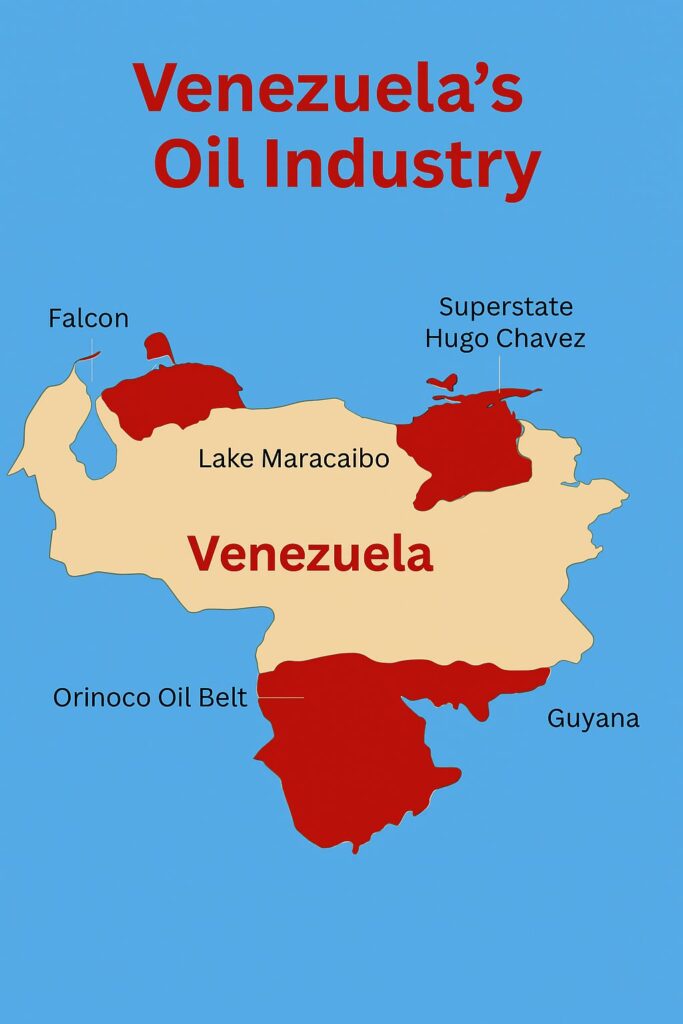
Venezuela’s oil industry has long been the backbone of its economy and a defining force in its global identity. With the largest proven oil reserves in the world—estimated at over 303 billion barrels—Venezuela’s petroleum wealth has shaped its political, economic, and social trajectory for more than a century. Yet, this immense resource has also exposed the country to volatility, mismanagement, and geopolitical tension.

Origins and Early Development

Oil seepages were known to Venezuela’s Indigenous peoples long before colonization. They used the thick black substance, known as mene, for medicinal and waterproofing purposes. The first documented shipment of Venezuelan oil occurred in 1539, when a barrel was sent to Spain to treat Emperor Charles V’s gout.

The modern oil era began in 1914, when the Zumaque I well struck oil in the Maracaibo Basin. This discovery marked the birth of Venezuela’s commercial oil industry. Foreign companies, especially from the U.S. and Europe, rushed in. By the 1930s, foreign firms controlled 98% of Venezuela’s oil output, with Standard Oil and Royal Dutch Shell dominating the landscape.

Nationalization and PDVSA

In 1976, Venezuela nationalized its oil industry, creating Petróleos de Venezuela, S.A. (PDVSA). This move was part of a broader wave of resource nationalism across Latin America. PDVSA became one of the most respected state-run oil companies globally, known for its technical expertise and efficiency.

During the oil boom of the 1970s, Venezuela was dubbed “Saudi Venezuela.” Petrodollars funded infrastructure, education, and social programs. However, the economy became dangerously dependent on oil, which accounted for over 90% of export revenues.

Decline and Mismanagement

The 1980s oil price crash exposed Venezuela’s vulnerability. Debt soared, inflation surged, and poverty deepened. In response, the government imposed austerity measures, triggering the 1989 El Caracazo uprising—a violent protest that marked a turning point in public trust.

Hugo Chávez rose to power in 1998, promising a “Bolivarian Revolution” funded by oil wealth. Initially, poverty declined and social spending increased. But Chávez’s policies—mass nationalizations, strict currency controls, and politicization of PDVSA—undermined the industry’s efficiency. By 2011, oil made up 96% of Venezuela’s exports, leaving the economy exposed to global price swings.

Strengths of Venezuela’s Oil Industry

  • Massive reserves: Venezuela holds the world’s largest proven oil reserves, surpassing Saudi Arabia and Iran.
  • Strategic location: Proximity to the U.S. Gulf Coast refineries made Venezuela a key supplier for decades.
  • Experienced workforce: PDVSA once boasted a highly skilled technical staff and global partnerships.

Weaknesses and Challenges

  • Heavy crude: Much of Venezuela’s oil is extra-heavy and located in the Orinoco Belt. It requires costly refining and blending with lighter crude to be commercially viable.
  • Infrastructure decay: Years of underinvestment and mismanagement have crippled pipelines, refineries, and export terminals.
  • Political interference: PDVSA became a political tool under Chávez and Maduro, leading to brain drain and corruption.
  • Sanctions and isolation: U.S. and international sanctions have restricted Venezuela’s access to markets, technology, and capital.

Geopolitical Impact

Venezuela’s oil wealth has made it a focal point in global politics. During the Cold War, the U.S. supported anti-communist regimes to protect oil interests. In recent years, sanctions and diplomatic isolation have pushed Venezuela toward alliances with Russia, China, and Iran, reshaping hemispheric dynamics.

What the Future Holds

Venezuela’s oil industry remains a paradox: immense potential trapped by dysfunction. Reviving the sector would require:

  • Depoliticizing PDVSA and restoring technical expertise
  • Attracting foreign investment and modernizing infrastructure
  • Diversifying the economy to reduce oil dependency

Until then, Venezuela’s oil wealth will continue to be both a blessing and a burden—an untapped promise waiting for reform.