
Home Blog Page 46

Some Truth About Welfare

0
Reading Time: 5 minutes

Welfare Definition

We all know what welfare is and as a heated and polarized election season has kicked off we will no doubt hear much about this system and its needed reform – or from some candidates its needed abolishment. Welfare, as pundits like to point out, is where our hard earned taxes go to fund those who don’t work as hard. Sentiments such as these are encompassed in popular memes like these that tend to saturate social networks and media.

d581f-welfare2b252812529 welfare2 welfrare1

welfare3

To be sure, the welfare system suffers great abuse, and as long as there is charity and other social programs this abuse will endure. The U.S. system of welfare should be under constant and consistent reform to weed out fraud and abuse. That being said, fans of messages and memes like those above miss the point and the facts of welfare in the United States.


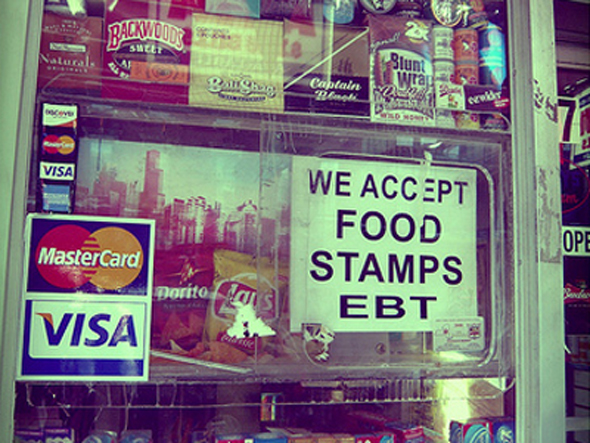
The idea of drug tests for welfare recipients makes sense at first when we paint the brush of lazy frauds over all welfare recipients but that is simply not the case. Not all (in fact not most) of those who receive welfare benefits are frauds. As the number of food stamp recipients has skyrocketed since 2008 these recipients frequently include hard working men and women who are simply not making enough to feed their families. Last year the US government provided $80 billion in aid through the food stamps program alone. Some of that went to scammers, frauds and lazy people who have no intent to work a real job – but only a blind ideologue could believe that all of it went to such people. Many are helped by this program and other programs like it.


There is another consideration though. What about the children? If an adult recipient of welfare benefits such as food stamps or free school lunches is a lazy, drug using, scammer, does that still justify a society to punish their children for this behavior when it is in our power to do otherwise? For many poor kids today welfare in the form of free school lunches and breakfasts are the only meals they get.


Arrogant memes like those above insult the many recipients of government assistance who are working very hard but falling through the cracks of an economy shifting toward greater and greater disparity between rich and poor. Worse, such comments overlook the weakest in our society; children often living with the consequences of their parents’ decisions. Punitive measures against all welfare recipients have more victims than we realize.


Gandhi once said, “A nation is judged by how it treats its weakest members.” We would do well to remember such sentiment when promoting these opinions.


All of this however is actually part of a greater illusion. The true fact is that the greatest benefactors of welfare in the United States are not the poor but corporations. This is the dirty secret that will not be mentioned during the campaigns this year by those who talk about abolishing welfare. They really only mean “some” welfare.


Between 2008 and 2010 the largest beneficiaries of government welfare (called subsidies when it is not poor people getting the money) were based in four specific industries – 1) finance, 2) utilities gas and electric, 3) telecommunications, 4) oil, gas and pipelines. More than $222 billion went to just 280 companies from these four industries. (Source)


American auto makers fair pretty good on the government’s (that is the American taxpayer’s) dime. Chrysler and Ford each raked in over $2 billion in government subsidies, while General Motors did a bit better at over $3.5 billion. Nike pulled in $2 billion which must help securing those big endorsements. The top single corporate beneficiary of government welfare was the defense contractor Boeing who received more than $13 billion in government subsidies. (Source) After the great recession of 2008 Goldmann Sachs, one of the instigators of said recession, received over $650 million in government subsidies. This was separate from the billions received by the big banks during the 2008 from the government.

boeing-757-154861


(This map from the New York Times shows where government subsidies (i.e. corporate welfare) is distributed across the country.)


A study found that the junk food industry subsidies received since 1995 would purchase almost 52 billion Twinkies today. This problem goes far back and is not a phenomenon active only in economic downturns. In 2006 a study showed that corporate subsidies almost doubled what the government was giving to the poor at that same time. Let’s not forget the subsidies that farmers and small towns receive as well. Add to that, programs such as WIC and food stamps aimed to help the poor go a long way in adding to the bottom line of companies like Walmart and other large grocery retailers.


The argument could be made that such subsidies/corporate welfare create funds within the recipient companies that in turn create jobs and therefore benefit society as a whole. That might be true. That is certainly the economic logic that supports them. My point here is not to test the validity of that logic, but to question why there is an argument being made for one kind of welfare and not for the other among some people. It could be argued that poor people who receive welfare benefits have less stress and more time to spend with their kids who then turn out as healthier members of society and better employees for those companies. That also may or may not be true.


In a world of increasing polarization and coded messages it would benefit us all to be slower in pointing the finger at those we assume are doing the most harm to the system and our way of life. When we demonize one party or the other it is often because we have not taken the time to consider a justification for their positions. These harsh and polarized positions run the risk of leading us to behave in a manner contrary to our own values and beliefs for the sake of misinformed ideology.
 

Brainwashing in the 21st Century – Viacom

2
Reading Time: 2 minutes

Part 2

If you are my age you remember a time when MTV actually played music videos. Today the channel is much more active in running reality TV and award shows that feature the most provocative acts aimed to gain the most post award show attention. (At what point do people like Brittany Spears and Miley Cyrus become cliché?)

Viacom
Viacom is not even the largest media conglomerate. (Click on image for larger view)

Spike TV stereotypes juvenile male behavior. BET is entertainment for African Americans. VH1 is for the more sophisticated (meaning older) partakers of entertainment. Comedy Central teaches us how to see the world. CMT is for the good ol’ boys. Nickelodeon and Nick Jr. are for the kids and TV Land is for the older folks. And all of these are owned by the media giant Viacom with direct access into our lives and homes from the cradle to the grave.

Naysayers will protest but to believe this conglomerate has not impacted our society’s understanding of right and wrong, and standards of good and bad seems pretty blind in my opinion. When we see the VMA awards ramp up the levels of excess and provocation every year (The Most Controversial Moments in the History of the VMAs), and we see Spike TV consistently portray and cater to men at the level of fraternity parties we should not believe these efforts are too separated. Why would we believe Nick Jr. and Nickelodeon are any more differently managed in their efforts and successes to shape social norms and standards as their sister channels.

This is a reality our political leaders understand. A recent Politico article revealed how President Obama relied on Comedy Central’s recently top rated act Jon Stewart, to move the public toward his side of the 2012 elections and the 2011 budget battles. Entertainers move our society and the leaders of these brainwashing efforts in the 21st century are not the individual actors but the puppet masters behind the curtains – the media conglomerates.

Next time you set your toddler in front of Nick Jr. you might think twice.

Brainwashing in the 21st Century – Walt Disney Company

1
Reading Time: 2 minutes

This set of graphics accompanies the upcoming podcast episode The Prophets of Babylon (set to release in the next few days) to demonstrate the vast scope and influence which the media has in our lives today.

The graphics will be published in 3 separate posts.

Imagine what a group like the Nazis would have done with the propaganda power welded by today’s media conglomerates. We barely bat an eye and somehow believe the same people who push certain values and standards to young adults are no less committed to those values and standards among younger and older audiences. From the age of toddlers to retirees, the multi-media conglomerates are working to hold your attention and the attention of your family. Each network is targeted on a particular demographic but the conglomerates behind the networks influence us from the cradle to the grave. These graphics only tell part of the story with some of the most familiar networks and brands.

Not shown here are the additional radio, television and print outlets owned by these same conglomerates. We also cannot forget the theme parks not shown here.

Walt Disney
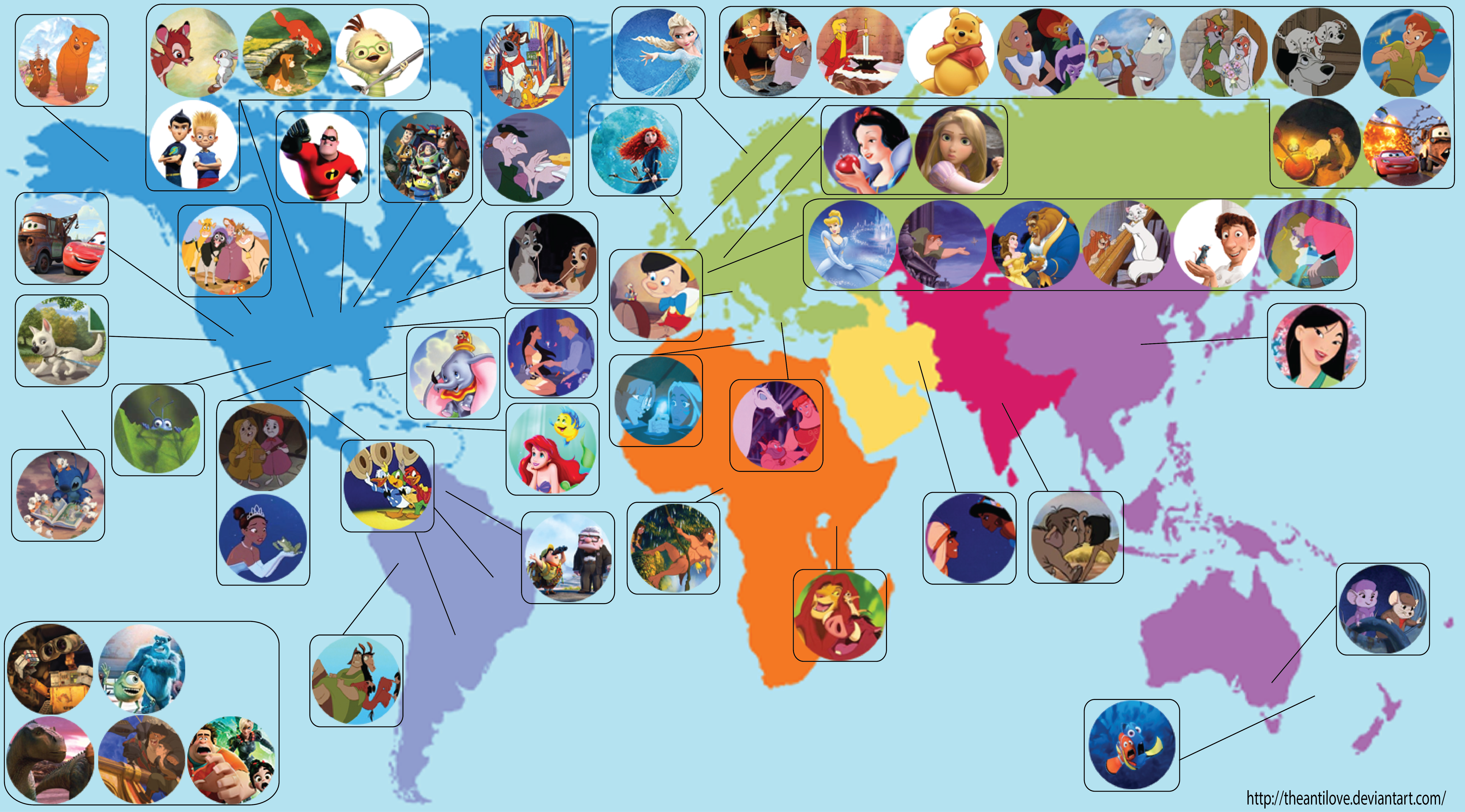
This graphic captures just a fraction of the Walt Disney Company’s holdings and networks of social influence. (Click on the image for a larger view)

The same Walt Disney studios that entertains our children and teenagers with brands from Pixar to the Disney Channel to Marvel also owns Miramax and Touchstone pictures. The values of right and wrong are apparent in the kid and family friendly brands but should we really believe that the items produced and distributed through their brands targeting more mature demographics are no less deliberate in their influence and indoctrination? Does Lifetime not have  a message on what a successful woman in today’s modern world looks like? Is ESPN not affecting the values of our society? Thank the Walt Disney Company for these influences.

Another Walt Disney subsidiary, ABC Family has released a family television show since 2013 known as The Fosters. “The offbeat drama charts the ups and downs of an interracial lesbian couple and their multi ethnic brood of biological, adopted and foster children.” Preachy?

From age 2 to age 70 the Walt Disney Company has a network of brands and media outlets used to influence and shift society toward its intents. This is what the power to brainwash in the 21st century looks like.


1967 Six Days War Timeline – Infographic – the End of History

0
Reading Time: < 1 minute

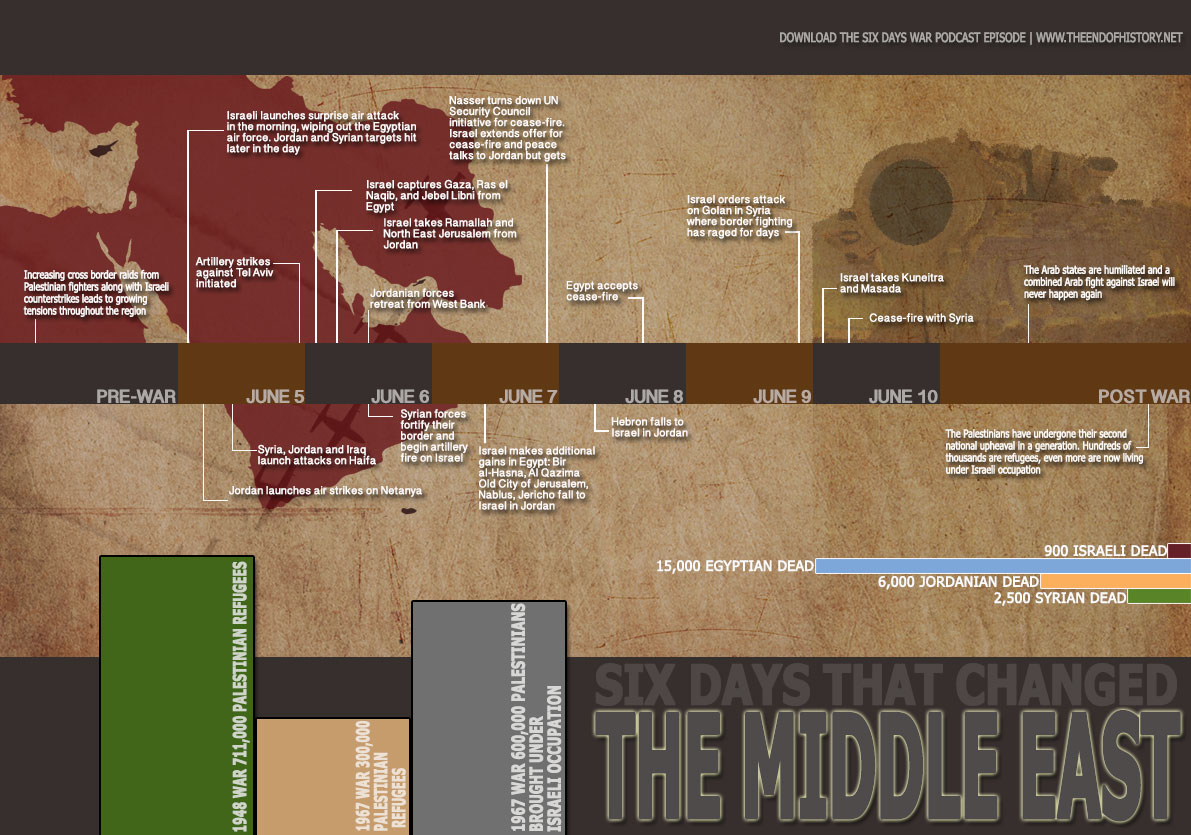
This is a graphic of the 1967 Six Days War timeline. It goes well with my podcasts and guides on the story. Learn more about the Six Days War here: A Complete and Balanced Guide to the Israeli-Palestinian Conflict – Chapter 11: The Six Days War of 1967.  You can find my podcast series on the topic here at the SoundCloud page for the End of History. (Click on the infographic image for a larger view)


six days war timeline

26 Great Reads for Understanding Modern India

0
Reading Time: 4 minutes

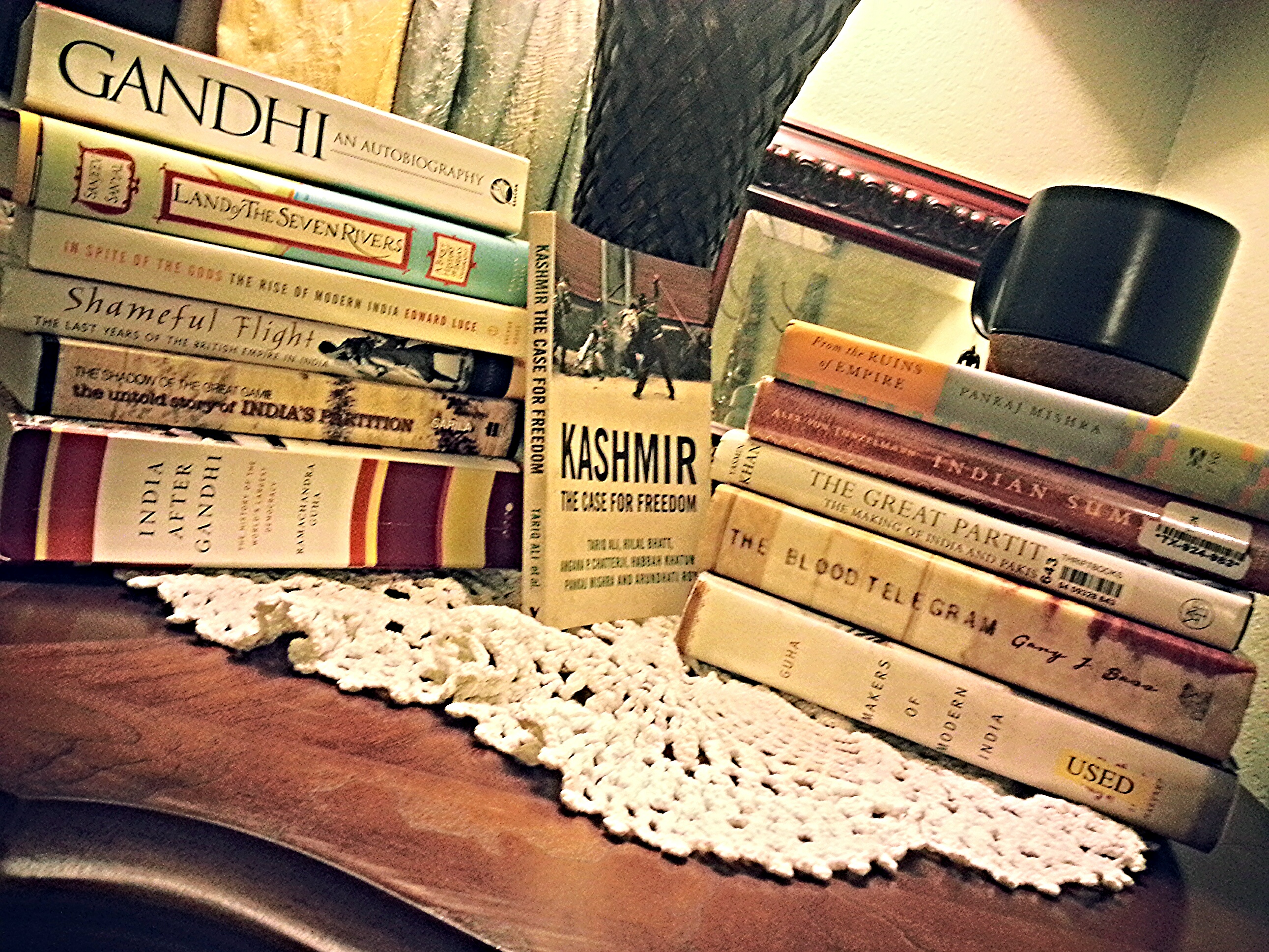
I still have several episodes left to completion of the series on the history of modern India but I thought I would go ahead and get this listing out. At the end of each podcast series I try to provide a listing of books that were used in researching the series. This post serves as a recommended reads list on India and also a bibliography for the podcast series:

IMG_20140512_072944

  • Gandhi: An Autobiography – If you listed to the episode on Gandhi you know I’m not a fan of this book. It is a torturous read but kind of mandatory if you want to know more about Gandhi.
  • India: A Portrait by Patrick French – This is looking more long term than the modern history. It’s not a bad read.
  • The Story of India by Michael Wood – Again, this is more about the ancient history and hardly touches on the modern era that our series was about. It is not in depth either. Some might recognize the author from a documentary series on the BBC I think.
  • Gandhi & Churchill by Arthur Herman – This was one of the first really good ones I came across in my studies on India. This helps provide a lot of the context between the 1857 mutiny and the rise of the independence movement. I highly recommend.
  • Land of the Seven Rivers by Sanjeev Sanyal – This is more ancient history. The writing is really good and it has some interesting perspectives. Unfortunately it feels like it is just starting about the time you get to the last page.
  • Kashmir The Case for Freedom by Tariq Ali, Hilal Bhatt, Angana P. Chatterji, Habbah Khatun, Pankaj Mishra and Arundhati Roy – As the long list of authors might give away, this is a book of a collection of essays on Kashmir providing different perspectives from different sides of the issue. Really good book to introduce a reader to the Kashmir conflict.
  • In Spite of the Gods The Rise of Modern India by Edward Luce – If I’m not mistaken Luce is with the Financial Times. This book looks at various issues of modern India and provides some context. This was one of the first non history books I got into and it was really good. Unfortunately, after the election of Modi, a lot of Luce’s perspectives are now dated.
  • Shameful Flight  The Last Years of the British Empire in India by Stanleey Wolpert – Really good book that lays out the setting as India and Pakistan move from independence movement to partition.
  • Shadow of the Great Game The Untold Story of India’s Partition by Narendra Singh Sarila – This book lays out the partition and tries to set it in the context of great power politics. There is a lot of good documentation and good history here. The first half of the book is more successful as proving the author’s premise than the second half.
  • India After Gandhi The History of the World’s Largest Democracy by Ramachandra Guha – You heard me quote from this one several times in the series. Definitely my number one recommendation for anyone wanting to read about the history of modern India.
  • Makers of Modern India by Ramachandra Guha – Another one by Guha, this one offers a profile on different influential leaders who helped shape the new nation and then a sample of their writings. I enjoyed looking at this one to get a feel for some of the characters in the story. The episode on the founding fathers relied heavily on this one and if you read it you will note how difficult it was to narrow down the list of characters I discussed in that podcast.
  • From the Ruins of Empire the Intellectuals Who Remade Asia by Pankaj Mishra – This one is not strictly about India but I would say it is recommended reading for anyone wanting to understand the rise of independence movements in Asia in the 20th Century. Very well written and very good book.
  • Indian Summer The Secret History of the End of an Empire by Alex von Tunzelmann – I think I quoted from this one in a couple of episodes, notably the partition and independence episode. This book is well researched. It reads almost like a novel, so much so at times that I had to double check some of the sources. This is enjoyable reading for anyone new to the topic.
  • The Great Partition and the Making of India and Pakistan by Yasmin Khan – Very good book on a very sad topic.
  • The Blood Telegram India’s Secret War in East Pakistan by Gary J. Bass – This is a well documented and well written read that goes over the 1971 war for Bangladesh. This one was up for several awards while I was in the middle of researching the series and I’m really glad I included it in my personal reading list.

[the_ad id=”4167″]

Beyond these books there were also a small collection of web sites and articles utilized during the research for this series.


If you are enjoying this post about 26 Great Reads for Understanding Modern India then you should check out my India Backgrounder. It features a full online series on the history of the world’s largest democracy along with podcast episodes and various explainers to give you understanding of the current issues unfolding in India.

Natural Disasters and Unnatural Losses

1
Reading Time: 3 minutes

The whole world has watched the tragedy in the Philippines unfold this past week and held our breath together as the death counts rise higher and higher. In addition to Typhoon Haiyan there were also earthquakes in Delhi India, and a cyclone that claimed up to a hundred lives in Somalia. While we might never grow fully accustomed to these tragedies they are occurring in greater frequency especially in the developing world. Politicians and environmentalists are urging people to recognize the significance of global warming and climate change as revealed in these disasters. I do not doubt the truth in these statements and join with these people in sounding the alarm however there is another element to the tragedies that is all too uniform. We need to recognize the relationship between natural disasters and the poor.

From earthquakes in Pakistan, flooding in south Asia, and mudslides in Central America there is an economic dimension of the tragedy that is often overlooked. Cyclones, typhoons, mudslides, hurricanes, earthquakes and almost any other natural disaster we want to add to this list have been occurring for centuries. Their intensity may be increasing due to climate change but this alone does not account for the rising death tolls. Two things can be attributed to this: 1) increasing global populations and 2) the location of these populations in respect to the natural disasters. These two factors might seem self evident except when we recognize the demographics of the victims who in almost every natural disaster reside at ground zero.

To illustrate my point we need look no further than New Orleans, LA and Hurrican Katrina. New Orleans was no stranger to hurricanes before Katrina but the intensity of that monster surprised everyone. Through the course of many decades enduring one hurricane after another those properties and housing which sat in the most dangerous locations of New Orleans when a hurricane hit soon became anathema to developers as well as middle to upper income families. The properties thus became low value and then low income housing. When Katrina hit everyone in New Orleans sufferend but those in the direct path of the storm and its subsequent flooding happened to live in the property that always took the brunt of these storms. As a result neighborhoods like the ninth ward became household names as we watched poverty stricken Americans suffering under Katrina’s floods. The most dangerous place to live in a hurricane functioned like an economic magnet drawing the poorest individuals and families to affordable housing prior to the hurricane.

This same story is played out in Pakistani earthquakes, flooding in Bangladesh, mudslides in Guatemala, and so on…

The disasters are not as surprising as we are often led to believe; although tragic, they occur on a frequent basis in these geographic regions. Similarly the socio economic status of the victims are also not that surprising nor are they all that natural. It is the effect of growing populations and the poorest of the poor being pushed to the edges of national and local infrastructure.

Many like to use this observation as a political argument against cold hearted incumbents who do not care for the poor of their own country. I find that to be adding insult to injury for the victims of these natural disasters as well as their survivors. This is less a story about the deliberate cold cruel heart of man than it is about the negative byproducts of globalization. The same countries benefitting the most from globalization often have large population segments who suffer the most in these natural disasters. It is more about the evolution of economies than it is about heartless national leaders.

The drive for profits and economic growth is to be expected from our national leaders but this should be partnered with an increased awareness of those not benefitting and perhaps even being disadvantaged by current conomic growth.
Sign up for free email subscription to the End of History and receive weekly updates to your inbox. Unsubscribe anytime. 

Enter your email address:

Delivered by FeedBurner

The Ages of History

0
ages of history
Reading Time: 7 minutes

The history of international politics and warfare can be divided into four primary eras. Each distinct era represents changing ways in which power and influence functioned and were best utilized by the nations in these periods. Recognizing these unique eras gives us insight into how nations have risen and fallen throughout history as well as what it is that brings about strong nation states and international entities in our own modern day and age. These historical eras are not defined by dates but rather by the rising and falling of different systems of thought and dominance among the nations. What worked in one era would not be the key emphasis in the next even though certain aspects might be carried over and assimilated into the trends and factors of the new era or age of history.

Age of Conquest

conquistador

The age of conquest extended from the times of the ancient Persian empires and peaked with the Spanish conquistadors. This age was synonymous with the sacking of cities, the destruction of empires and the ravaging of conquered lands and peoples. The conquistadors themselves established their power throughout much of the western hemisphere following Columbus’s voyages at the end of the 15th Century. At its peak, no other nation or people group could touch the accumulated power of Spain.

Central to the ideas that drove the age of conquest was a complete disregard to any long term impact, positively or negatively, upon the conquered lands and people. The age of conquest was not about establishing settlements or expanding governing systems. It was about looting. Like a piece of fruit being squeezed dry in an iron grip, the conquerors sought to drain the lands and people they conquered of all resources as fast as possible. They were merciless in their transactions.

The age of conquest was also one of immense discovery as the conquerors pushed further and further into the unknown. This explorative drive was not for the benefit of learning however but once again driven by a hunt for more treasure and power. From the Mongol Horde to the Spanish Conquistadors, those nations who best adapted to the rules of this great and violent game of power during the age of conquest found themselves with the fullest treasuries, the largest armies, and the greatest security at home.

Age of Military Power

imperialism

The age of military power flowed inevitably out from the age of conquest but the rules of influence and power shifted in this new era. Power and influence among the nations was no longer predicated upon an ability to merely extend force for short periods of looting and pillaging. Power and influence were built upon a capacity to extend military force for long term domination and control of other peoples and lands. The age of conquest robbed other nations of their treasures. The age of military power took the treasures but then maintained dominance over the people for long term systematic robbing and looting. It was called imperialism and colonialism. The most powerful of nations during this era were those who could deploy force most efficiently and effectively for long term economic returns.

From Africa to Asia and Latin America the nations of Europe dominated this era with century long colonization projects. Nations like Belgium were just a brutal as any conquistador through their colonies in the Congo and other locations but this brutality was one of extended domination and enslavement so that the resources of the nation and the people could flow into Dutch coffers not through one expedition alone but through annual returns which came to prop up the European nation’s budget and economy.

No nation was more effective in the age of military power than Britain whose effective use of its military and especially its naval force built up an imperial empire which at its peak saw the sun both rise and set on its dominions. Like the age of conquest, the conquered people were of little consideration in the minds of the powerful except insofar as they maintained a steady annual flow of financial prosperity to the ruling nation.

Age of Politics

age of politics

The age of politics was partially a response to the imperialism of the age of military power and partially an adaptation. Much of the 20th Century was defined within the terms of the age of politics as a struggle between Communism and Democracy, but there was also Fascism, Socialism, and others. The age of politics was an era of ideas and a movement of the masses. The words and ideas of men long dead, from Karl Marx to Thomas Jefferson, took on a sacred validity as governments and leaders exercised idealistic convictions to benefit their own efforts in expanding power and influence. Power became dependent upon legitimacy among the people and the right to legitimacy was often earned but just as often forced. In prior ages men fought, killed and died because the king ordered them to do so. In the age of politics they did so out of conviction to a set of ideas.

Unlike the prior eras it was no longer conquest or profits alone that fueled a drive to warfare but a rallying around the banner of freedom, opposing tyranny, honor of the Fatherland, or freeing the working class. The nations and leaders who could best espouse their political ideologies managed to extend the reaches of their influence and power further into the world. The means for this extension remained based in military strength but the military strength was now founded upon political ideals. The age of politics was one of revolution in which men like Fidel Castro, Mohandas Gandhi, and Gamal Nasser could secure power among their followers even without a strong military.

The benefits of power also continued to be economic, but the harsh edge of the “white man’s burden” which imperialism was infamous for was no longer tolerated. Warfare was based on ideas. The best political ideas gained the greatest economic rewards.

This was the era in which American global power came of age and many of our current arguments, ideals and values are still rooted in the rules of this age. The problem is that the world has once again change and we are in a new era of history.

Age of Economics

economic


It is economic strength that won the Cold War and economic weakness that lost the same war. The US and the Soviet Union certainly fought many proxy wars with their military but the ultimate terms of victory and defeat were defined upon economic grounds. Similarly, the strongest entities of this current era are those whose strength is based upon economic terms, not upon military strength or political ideals. In many ways the age of economics supersedes the nationalism and even the nation state organizational system of the age of politics. Alliances and unions from the European Union to the BRIC nations (Brazil, Russia, India, and China) carry influence on par with the US, and Japan. Military strength is still important and always will be but in the age of economics it is less important how many battleships a nation can put to sea and more important how great is the nation’s GDP. GDP means power. That power can manifest as armies or as new trade agreements.

The rise of China over the last decade and a half has been defined in strictly economic terms. They have won no wars. Their political ideology is a hybrid of state controlled capitalism that would have never been allowed during the age of politics. The potential of India’s strength is consistently forecasted in economic terms not military. Pakistan and India both have nuclear weapons and yet that is no longer a measurement of power. The rise and threatening decline of the EU has not been based upon territorial grounds or military gains or losses but singularly upon economic terms.

Implications

Understanding the unfolding of history in this light gives us a certain insight advantage in understanding the past as well as the present. We understand how the Soviet’s “age of military” style in managing the USSR could not withstand the age of politics and the transition into the age of economics thus its mechanisms for collapse were built into its dysfunctional relationship with the outside world. We understand the origin of the vast lexicon of ideologically oriented rhetoric in the American political system that found its greatest victories in the age of politics as well as the ineffectiveness of this same rhetoric to confront issues and realities in the age of economics. A war hawk is no longer as threatening as a trade obstructionist and the potential of an economic collapse in the EU is more concerning to global order than Iran’s pursuit of nuclear power.

There is an order to strength and effectiveness in every age and understanding this order decodes the mysteries of why one empire falls and another rises, why one system works and then suddenly becomes impotent. The nations of the world have always operated in schemes of self interested pursuit of power but the manner by which that power is obtained, utilized and enhanced is prescribed by the rules of the age.

the end of history web site and podcast is focused on truth based Christian insight on today’s global issues

JB Shreve and the End of History

↑ Grab this Headline Animator

What’s Wrong with the Gun Control Argument

0
gun control
Reading Time: 6 minutes

A lot of my subscribers at The End of History, like me, came of age in the era of random mass violence. Columbine sticks out in my mind as the first big one that shocked us all. There might have been others before it but that is the mental icon I have for the first one that shocked us as a nation. Then there was Paducah, Jonesboro and the list goes on bringing us into the present with Virginia Tech, the guy at the Batman movie in Colorado, the nut job who shot Congress woman Giffords, and of course Newtown. Newtown sticks out to me simply because of the ages of the children and the incredible randomness of the killer’s actions. It does no good to compare any of these or the many that I did not list as worse than the other. As a parent I either can’t or won’t imagine what it would be like to lose a child to such meaningless and unnecessary violence.

In accordance with so many issues of our time however, these random shootings and attacks are not left alone as horrible acts of murder unto themselves. Instead they are strung together into a sequence of historical events and interpreted through a political filter to identify an explanation for them all. This has taken place so effectively that today when we hear of the most recent shooting somewhere in America we immediately think “gun control” and run to whichever side of the argument we are on. It was not always that way. When Columbine happened Americans did not immediately think gun control. I remember Marilyn Manson music (is he still around?) being suspect for having affected the behavior of the shooters, also video games and violent movies. (Remember the black trench coats that the Columbine shooters wore were supposed to be mimicked from the first Matrix movie?).

On the surface this mental leap from tragedy to political explanations makes sense. If the killers had not accessed the guns the killings would not have happened. Clearly then, this is an issue of controlling access to the guns for crazy people. The more senseless and violent the act (Newtown for example) then the faster our policy makers should move to control the access. Failure to move quickly is not only inviting the inevitable but a sign of our gridlocked state of political affairs and the hypocrisy of our political leadership.

There’s a flaw with this though. Our inability to quickly and intuitively recognize it is a sign of how effectively we have been programmed to understand these horrible acts of violence through the filter of public policy laid out above.

Here is the problem in a nutshell. Guns have been around for a really long time in America – school shootings and the scale of random gun powered violence we are seeing today, have not. Gun ownership has been around basically since it was enshrined in the US Constitution, technically before that but for the sake of a beginning number let’s say since that time. Mass shootings were not something that marked the close of the 18th Century, or any part of the 19th Century. In fact, we don’t really see them occur in any regular pattern of events until the end of the 20th Century in the US. Certainly there were some before this time but they were anomalies or belonged to some other issue like gang violence during the prohibition era whereas in our own day and age they have become a continuous but random occurrence in the news.

A revealing graph from that bastion of conservative thinking, Mother Jones

Why then, are gun and gun ownership so quickly linked as the cause of the surge in mass shooting in recent decades? To add a little more awkwardness to the question allow me to add this troublesome statistic noted in a recent study cited by The Atlantic. In recent years as mass shootings have become more regular in their occurrence, the percentage of Americans who own guns has (contrary to popular perception) been decreasing – not increasing. Americans still love their guns, far more than the rest of the world, but the number of families who own guns has decreased in recent years while mass shootings have increased.

In the study of reasoning there is a term called a “logical fallacy.” It refers to the development of a misconception resulting from incorrect reasoning. Logical fallacies take many different forms but in this instance it is simply confusing association with causation. In other words, just because there are a lot of guns and gun owners does not automatically mean that this is what has led to the spread of mass shootings in our society. In fact, the statistical fact that prior to the 1980’s these shootings did not exist with any degree of regularity completely separates gun and gun ownership from the causation of mass shootings. They might be associated but one is not the cause of the other. To mistake association for cause is a logical fallacy. It might be easy to counter that I am trying to debunk the obvious. If there were no guns then there would be no mass shootings. That is fine but the fact that for a couple hundred years there were guns and no mass shootings should also stand for something. To leap immediately to the solution that limiting access to guns will prevent mass shootings is leaping over a lot of consideration which should be included in examining why mass shootings and violence have become so rampant in our society. To assume that all of a sudden in the 1980’s something changed in the mindset of American gun owners that they began to cause mass shootings at an ever increasing pace is a logical fallacy that assumes association (gun ownership or gun existence) is the same as causation. Not convinced?

For hundreds of years Americans could walk into any general store and purchase a gun and ammo. The rise of gun control legislation has paralleled the rise of mass shootings and violence. Guns can be used for danger and violence but in American society, for a couple hundred years, they were not – at least not like what we are seeing today. The real question we should be asking ourselves and urging our policy makers to consider is – what changed? What gave rise to the use of guns for mass shootings and violence?

There were a few more things that changed in our society and culture correlating to the same timeline as the rise of mass violence, school shootings and the like. More Americans went on prescription medication than ever before as Rx became a lifestyle and not simply a remedy. More Americans grew up in broken homes thanks to rising rates of divorce and separation in marriages. More preservatives and artificial ingredients are included in our diets. The list could go on and on. Am I stating that these are the things that should be blamed as the cause for the rise in rates of mass violence? Not at all! They should be investigated though, as well as a number of other items that better correlate to the onset of mass violence in American society than do gun ownership.

There is another thing I have noticed in the arguments about gun control that so quickly  follows these tragedies. While Washington turns to new gun laws as a solution to the horror, the percentage of Americans in favor of greater restrictions on guns actually decreases on the norm. Why? Because gun laws tend to affect those people who have been obeying the law and not participated in random acts of mass violence for over two hundred years. Proposed legislation not to mention the media’s portrayal most often frames the argument at the expense of these gun owners. They are backward, old fashioned, out of touch, and unreasonable. Not so fast. These are the responsible people who, I say it again, have been obeying the laws already in existence for a couple hundred years or so. Why are they being targeted? As unfair as this is though I am more concerned that we are allowing these horrible acts of violence to continue and by all appearance increase in their frequency and scope by asking the wrong questions.

Guns and gun owners did not change in the early 1980’s when these incidents began occurring. It was people and our society that began changing. That is where our questions should be focused. What changed in our society? What changed among the young people who more often than not commit these murders? What led these individuals to point where they were consciously plotting random murder of innocents? Something definitely changed because our history is not witness to these types of tragedies at this rate of repetition until the last few decades. That question might take a little while longer to answer but it will get us to a true cause much quicker and until that is identified we will only be fighting shadows in our efforts to stop these tragedies from continuing.