
Few public officials have shaped modern American thinking about money, markets, and prosperity more than Alan Greenspan. For nearly two decades, Greenspan stood at the center of the American economy, becoming one of the most influential—and eventually controversial—economic figures in modern history. His rise, dominance, and fall tell an important story about how Americans came to view markets, debt, and economic growth in the late twentieth century.
Greenspan was born in 1926 in New York City and grew up during the hardships of the Great Depression. The economic collapse of the 1930s left a lasting impression on him. As a young man, he studied economics and developed a fascination with how markets allocate resources and create wealth. During the 1950s, he became associated with novelist and philosopher Ayn Rand and her circle of intellectuals. Rand’s philosophy of Objectivism celebrated individual freedom, capitalism, and limited government. Greenspan absorbed many of these ideas and became a passionate believer in the wisdom of free markets.
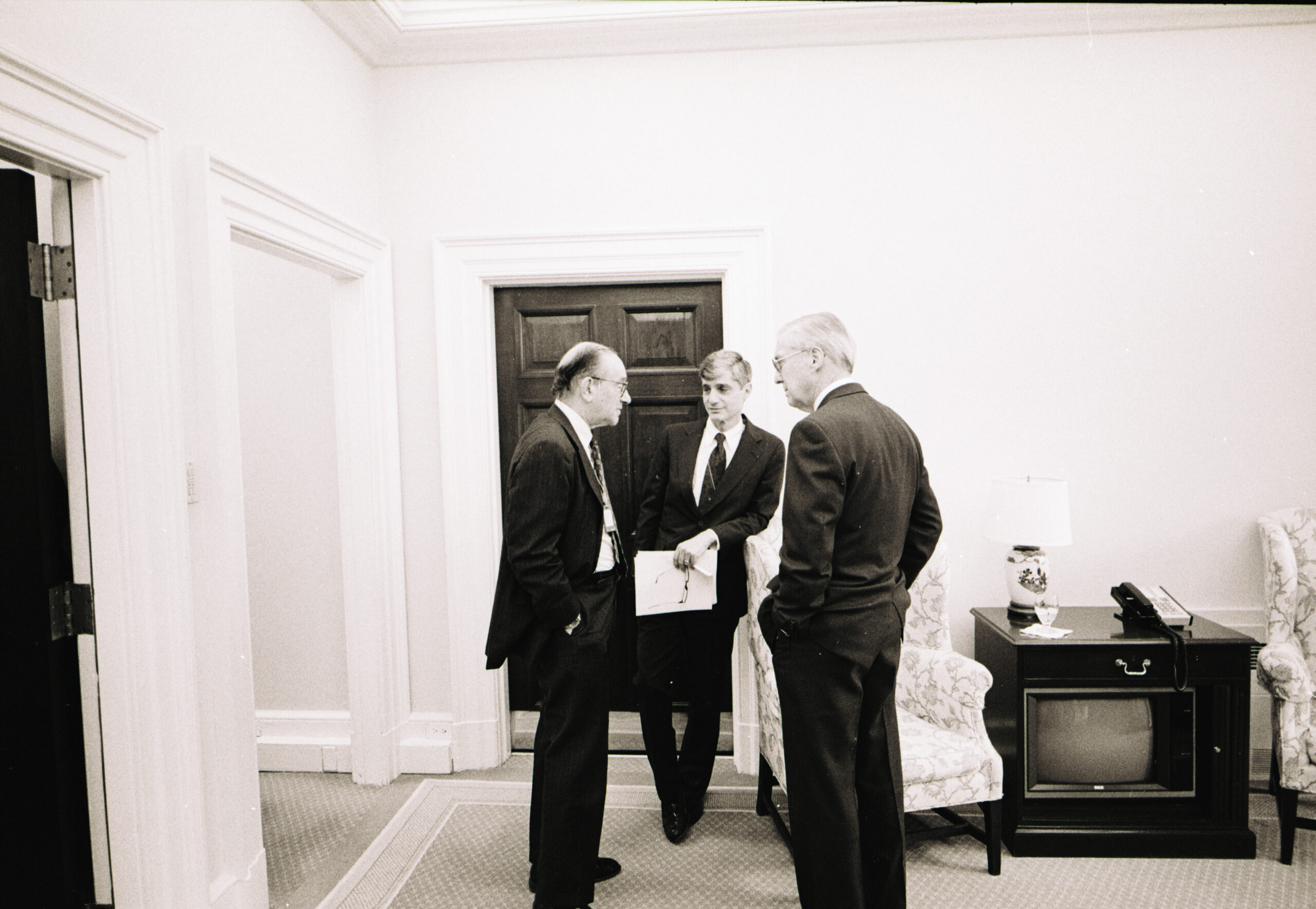
Before entering government, Greenspan built a successful career as an economic consultant. Politicians and business leaders sought his advice because of his reputation for careful analysis and forecasting. He served in several government roles before being appointed chairman of the Federal Reserve by President Ronald Reagan in 1987.
The timing could hardly have been more dramatic. Only weeks after taking office, Greenspan faced the stock market crash of October 1987. Markets plunged, and fears of a financial panic spread across the country. Greenspan responded by assuring investors that the Federal Reserve would provide liquidity to stabilize the financial system. The crisis passed, and his reputation as a steady hand began to grow.
Over the next eighteen years, Greenspan became something close to a national celebrity. Financial reporters analyzed every word he spoke. Investors hung on his testimony before Congress. Journalists called him “The Maestro,” suggesting that he conducted the American economy like an orchestra.
During the 1990s, the United States experienced strong economic growth, low inflation, rising stock prices, and rapid technological innovation. Many Americans came to believe that economic downturns could be minimized through careful management by the Federal Reserve. Greenspan’s influence helped reinforce a broader faith in markets and central banking. He argued that competitive markets, driven by self-interest and innovation, were generally better at allocating resources than government regulators.
His approach also changed how Americans thought about money. Earlier generations often viewed debt with suspicion and remembered periods of severe inflation or depression. Under Greenspan, easy access to credit became increasingly normal. Consumers borrowed more, businesses expanded through debt financing, and investors became accustomed to the idea that the Federal Reserve would lower interest rates whenever serious trouble appeared. Critics later referred to this expectation as the “Greenspan Put”—the belief that the central bank would step in to support markets during crises.
Yet beneath the prosperity, risks were accumulating. Following the bursting of the dot-com bubble in 2000 and the shock of the September 11 attacks, Greenspan’s Federal Reserve lowered interest rates aggressively. Cheap credit fueled a massive housing boom. Banks and financial institutions created increasingly complex mortgage-backed securities and other financial products. Housing prices rose rapidly, and many assumed they would continue rising indefinitely.
Greenspan largely trusted financial institutions to manage their own risks. His belief in market discipline led him to resist stronger regulation of many financial products. He assumed that banks, acting in their own self-interest, would avoid taking reckless risks because doing so would threaten their survival.
That assumption would be tested brutally in 2008.
By then, Greenspan had retired, but many of the policies and assumptions associated with his era remained in place. As housing prices collapsed, mortgage defaults surged. Financial institutions discovered that the complex securities they owned were worth far less than expected. Credit markets froze. Major firms failed or required government rescue. The result was the worst financial crisis since the Great Depression.
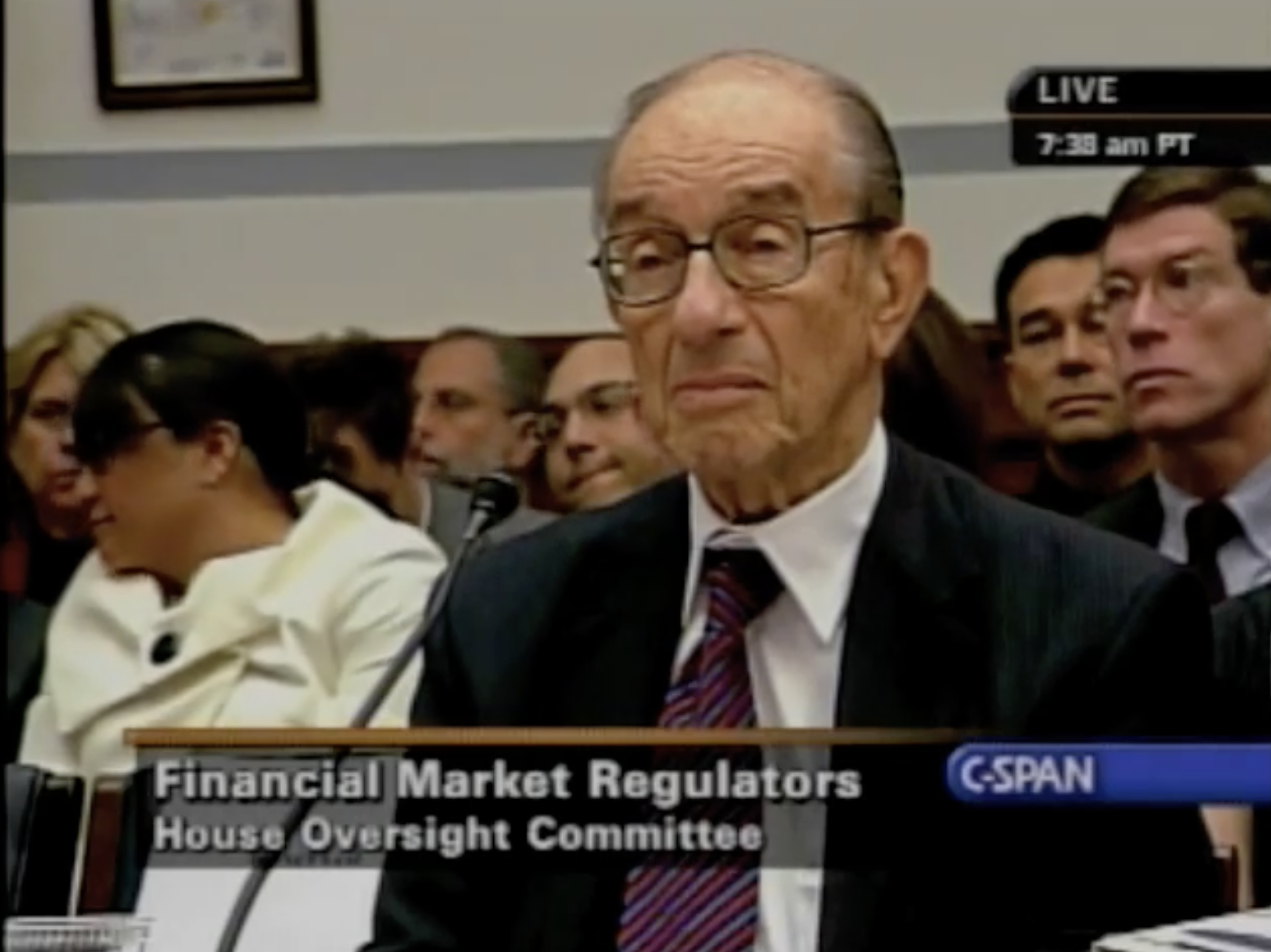
In easily one of the most remarkable moment in Greenspan’s public life, during congressional testimony after the crisis. Questioned about his faith in self-regulating markets, he admitted that he had found a “flaw” in the model he had trusted for decades. He acknowledged that the banks and financial institutions he expected to protect themselves had instead taken extraordinary risks. The worldview that had guided much of his career—that rational self-interest would reliably restrain dangerous behavior—had been shaken.
For many observers, the crisis marked the end of an era. Greenspan had symbolized confidence in deregulation, globalization, and the power of markets. The events of 2008 exposed weaknesses in that vision and sparked a renewed debate about the role of government oversight in the economy.
Alan Greenspan’s legacy remains deeply contested. Supporters credit him with helping guide decades of growth and stability. Critics argue that his faith in markets contributed to the conditions that produced the financial crisis. Yet few dispute his historical importance. More than any other central banker of his generation, Greenspan shaped how Americans thought about prosperity, debt, risk, and the ability of markets to govern themselves. His rise reflected the triumph of free-market confidence in the late twentieth century; his reckoning after 2008 revealed the limits of that confidence when confronted by reality.